
Russian Buyers in Spain after 2022: What Changed by 2026
 Wesna Group
Spain never closed its property market to Russian citizens, but the rules around the money did most of the changing. A 2026 buyer's guide to banking routes, notary scrutiny, residency paths after the Golden Visa, and where Russian-passport buyers actually land on the Costa Blanca and Costa Cálida.
Russian buyers kept showing up on the Costa Blanca after February 2022. Quieter than before, slower paperwork, more questions at the bank – but they kept coming. By mid-2026 the pattern has settled into something predictable, and the rules around it are clearer than they were eighteen months ago.
This article is for Russian-passport buyers who want a clean, sanctions-compliant purchase in Spain. Everything below applies to people not on the EU consolidated sanctions list. If your name is on any OFSI, OFAC or EU restrictive-measures list, this article does not apply to you, and Spanish notaries will refuse the deed regardless of the funds you bring.
What actually changed between 2022 and 2026
Spain never closed its property market to Russian citizens. The mechanics around the money did most of the changing.
Banking is the biggest shift. Spanish banks tightened source-of-funds checks on any wire arriving from a Russian-incorporated bank, and several stopped accepting Russian-origin transfers entirely. Sabadell, Santander and BBVA still accept them, but the file you submit needs to look very different from a 2021 file. Expect at least four documents on origin of funds, two reference letters from your home bank, and a personal interview before the account opens.
The Golden Visa is gone. Spain abolished it in April 2024 for everyone, not just Russians. If you read older articles claiming €500,000 buys you residency, those articles are out of date. The active visa routes for 2026 are the Non-Lucrative Visa (passive income around €2,400 per month required), the Digital Nomad Visa (remote-work income from a non-Spanish employer), and the Beckham regime for high-skilled workers.
Notary scrutiny is heavier. Spanish notaries now ask for a written origin-of-funds declaration on every Russian-buyer transaction over €100,000 and often below it. The declaration must reconcile to bank statements and, if relevant, to a property-sale deed or company-distribution document from Russia.
Read what replaced the Golden Visa in 2025–2026.
The four routes Russian buyers actually use in 2026
1. Direct wire through a non-sanctioned Russian bank
This still works for most buyers if you have a relationship with Raiffeisenbank Russia, UniCredit Russia, or one of the smaller foreign-owned banks still operating there. Transfers go via correspondent banking through Türkiye or the UAE. Expect 3–7 business days, 0.5–1.5% in correspondent fees, and a full document file at the receiving Spanish bank.
2. Transit through a third-country account
Buyers open a personal account in the UAE, Armenia, Georgia, Türkiye or Serbia, move funds there over several months, then wire to Spain. This adds compliance work on both sides – the third-country bank also wants origin documentation – but it puts the eventual Spain-bound wire under a non-Russian originator name, which simplifies the Spanish side considerably.
3. Property in someone else's name through a sociedad limitada
Some buyers form a Spanish limited company and the company purchases. This shifts the sanctions and origin questions from a personal level to a corporate level. Useful if you want multiple properties under one structure or if you are pursuing a corporate-led residency route. Adds annual filing costs (€800–€1,500) and removes the personal IRPF Beckham regime option.
4. Cash purchase under €100,000
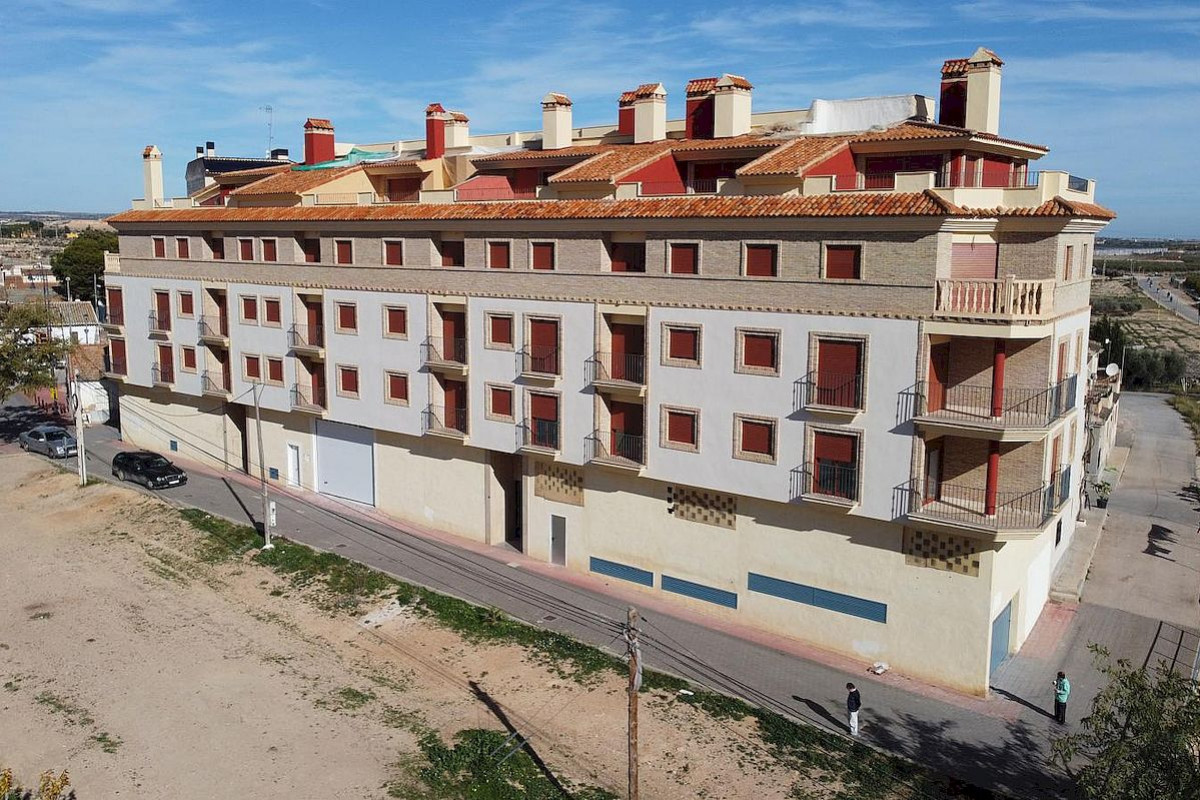
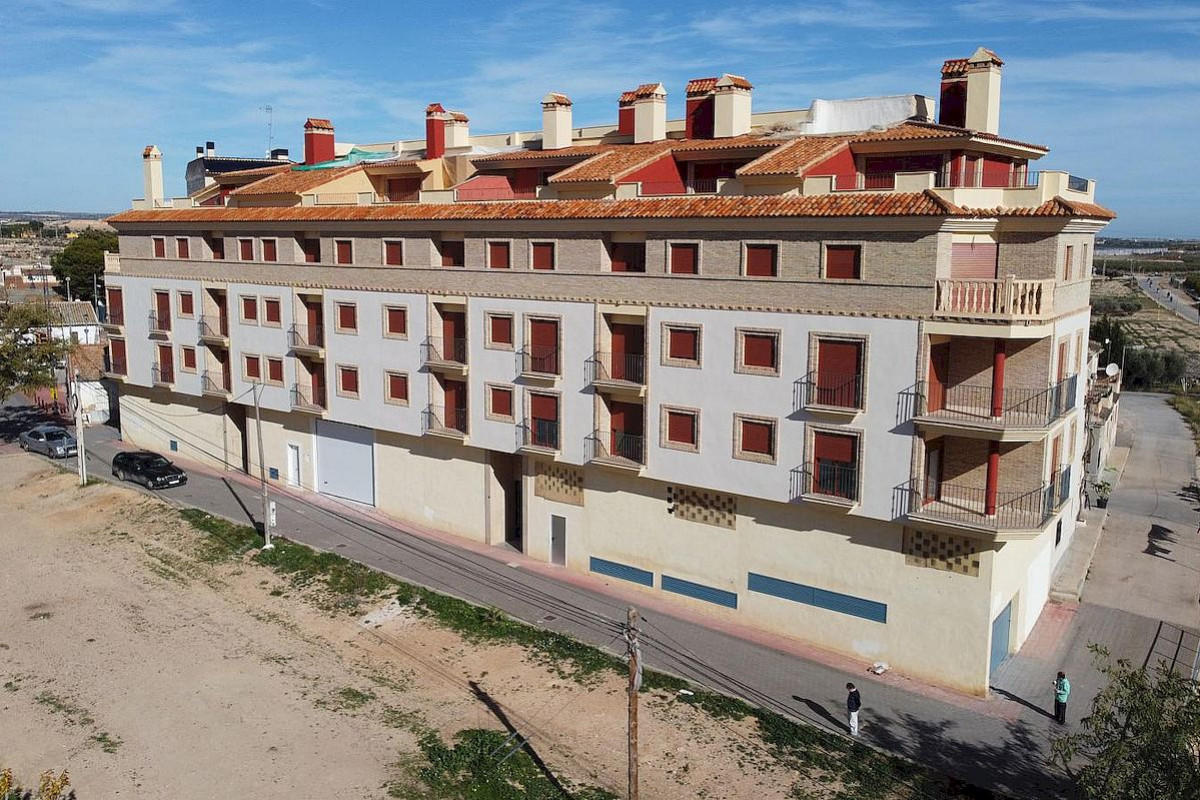
Spanish notaries register cash transactions under €100,000 with origin questions but no transfer-history requirement, provided the cash came through a regulated bank channel. Useful at the entry end of the market. Several of our Murcia and Costa Cálida listings sit in this band:
Where Russian buyers actually go
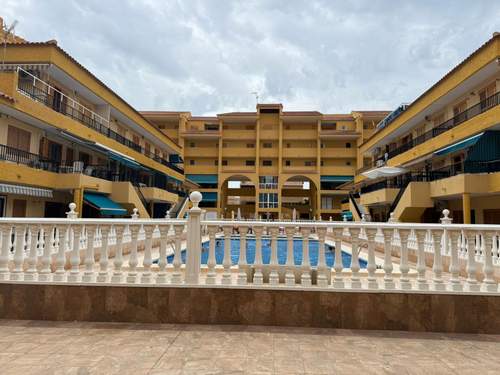
The pre-2022 map has not changed much. Torrevieja and the south Costa Blanca still hold the largest Russian-speaking community in mainland Spain. There is a Russian-language school, two Russian-speaking dental practices, a Russian Orthodox parish, and a network of Russian-speaking estate agents, notary translators, and tax advisers.
Browse our Torrevieja inventory (109 active listings). Specific finds in that pocket include WG-14 – 1-bedroom Torrevieja apartment, 42 m², €155,000 and WES-2240 – 1-bedroom Lomas de Cabo Roig apartment, 52 m², €147,500.
Benidorm and the north Costa Blanca pull the higher-budget segment – buyers who treat the purchase as a holiday-home plus rental rather than a first home. Browse Benidorm (33 listings) or look at WES-1410 – 1-bedroom Benidorm apartment, 77 m², €275,000.
Valencia and Murcia have grown as Russian-buyer destinations since 2023, mostly because they are cheaper than the coast and have direct flights from Istanbul and Yerevan, which most Russians use as their connection point.
Residency: the realistic 2026 path
Property purchase has not been a residency route in Spain since the Golden Visa ended. You buy the property because you want it, and you apply for residency separately.
For a Russian buyer in 2026, the two viable paths look like this:
| Route | Income required | Lives in Spain? | Best for |
|---|---|---|---|
| Non-Lucrative Visa (NLV) | ~€28,800/year passive, plus €7,200 per dependent | 183+ days/year, no work allowed | Retirees, rental-income earners |
| Digital Nomad Visa (DNV) | ~€31,800/year remote work from non-Spanish employer | Yes, work permitted | Remote workers paid from abroad |
The NLV is the workhorse for Russian buyers in their 50s and 60s. The DNV is increasingly common for IT and consulting professionals who kept their pre-2022 contracts.
Read the DNV breakdown for the income, the tax treatment, and the documentation list.
Common mistakes we still see in 2026
Showing up with cash above €10,000. EU rules require declaration at the border. The Spanish customs form is mandatory, and the missing declaration is the single most common reason a Spanish bank account opening gets paused.
Using a relative's Spanish bank account "just for the transfer." Spanish AEAT will treat the property as a gift to the account holder unless documented otherwise. The tax bill arrives one to two years later.
Buying off-plan from a non-EU developer who only accepts crypto. Spanish notaries will not deed-transfer a property where the documented payment trail involves a private crypto wallet. Use exchange-issued bank-transfer receipts only.
Skipping the NIE. Russian buyers without an NIE try to buy through a power of attorney to a Spanish citizen. The deed completes; the IBI and utility transfers do not, and the property ends up in tax-collection problems within the year.
FAQ
Can a Russian citizen still buy property in Spain in 2026? Yes, provided the buyer is not on any EU, UK or US sanctions list. The market remains open. Banking and source-of-funds documentation requirements are heavier than they were before 2022.
Do I need to fly to Spain to buy? No. You can complete the entire purchase by power of attorney to a Spanish lawyer. The signing of the POA itself can be done at any Spanish consulate that is still operating, or at a Russian notary with apostille and certified translation.
What is the minimum budget that makes practical sense in 2026? Around €100,000–€150,000 for a usable two-bedroom apartment in Costa Cálida (Murcia province, Mar Menor area) or Costa Blanca south. Below €80,000 you are in pre-renovation studios or one-bedroom interior units in older Torrevieja blocks.
Will my Russian-issued tax certificates be accepted by Spanish AEAT? Yes, with apostille and sworn translation. The Russian Tax Service still issues form 2-NDFL for income verification, and Spanish AEAT accepts it.
Can I rent out the property short-term? Depends on the autonomous community. Valencia banned new short-term tourist licenses in many municipalities starting 2025. Murcia is more permissive. Always verify with the town hall before purchase.
Talk to us at /contact if you want a confidential review of your specific situation, including pre-purchase banking setup and notary-ready documentation lists.
Get our Costa Blanca property guides
One short email a month with new neighborhood guides, market notes, and rule changes. No spam, unsubscribe in one click.
We use your email only for the newsletter. Read our privacy policy for details.