
Israeli Buyers in Spain 2026: Where They Buy and How
 Wesna Group
Israeli nationals bought roughly 1,100 to 1,300 Spanish homes in 2025, a small share of foreign demand but with an average ticket well above the EU median. Here is where they land, what they pay and the paperwork that trips them up.
Israeli nationals bought roughly 1,100 to 1,300 Spanish homes in 2025 according to Registradores de España quarterly data, a small slice of the foreign total but with an average purchase price well above the EU median. The flow accelerated after late 2023 and has not reverted. Costa del Sol still absorbs most of it, yet Alicante province, Valencia city and the Costa Cálida are now visible on the map.
How many Israelis bought property in Spain in 2025?
Around 1,100 to 1,300 transactions, depending on how the Registradores classify dual-passport buyers who sign with a European passport. That is roughly 1% of all foreign purchases, but the average ticket sits closer to EUR 380,000 than the EUR 220,000 all-foreign mean, which puts Israel inside the top ten source countries by capital deployed rather than by volume.
The shape of the flow changed in two ways after October 2023. Enquiries from Tel Aviv, Herzliya and Ramat Gan rose sharply in the following twelve months, with a notable share coming from families looking for a second home with easy exit optionality rather than a primary move. The typical buyer also got younger. The classic Israeli buyer of 2018 was 55-plus and shopping in Marbella. The 2025 buyer is often 35 to 50, works in tech or professional services, and is open to Valencia, Alicante or a quieter Costa Blanca town because the price per m2 is roughly half of Marbella or Barcelona.
Two caveats before anyone extrapolates. The Spanish Golden Visa was abolished in April 2025, so property no longer buys residency on its own. And the shekel-to-euro cross has moved against Israeli buyers in 2024 to 2026, which means the sticker price in NIS has climbed even where the EUR figure held flat.
Where do Israeli buyers cluster in Spain?
Three geographies, in descending order of size: Costa del Sol (Marbella, Estepona, Benahavis), metropolitan Madrid and Barcelona, and a newer Mediterranean belt running from Valencia down through Alicante province.
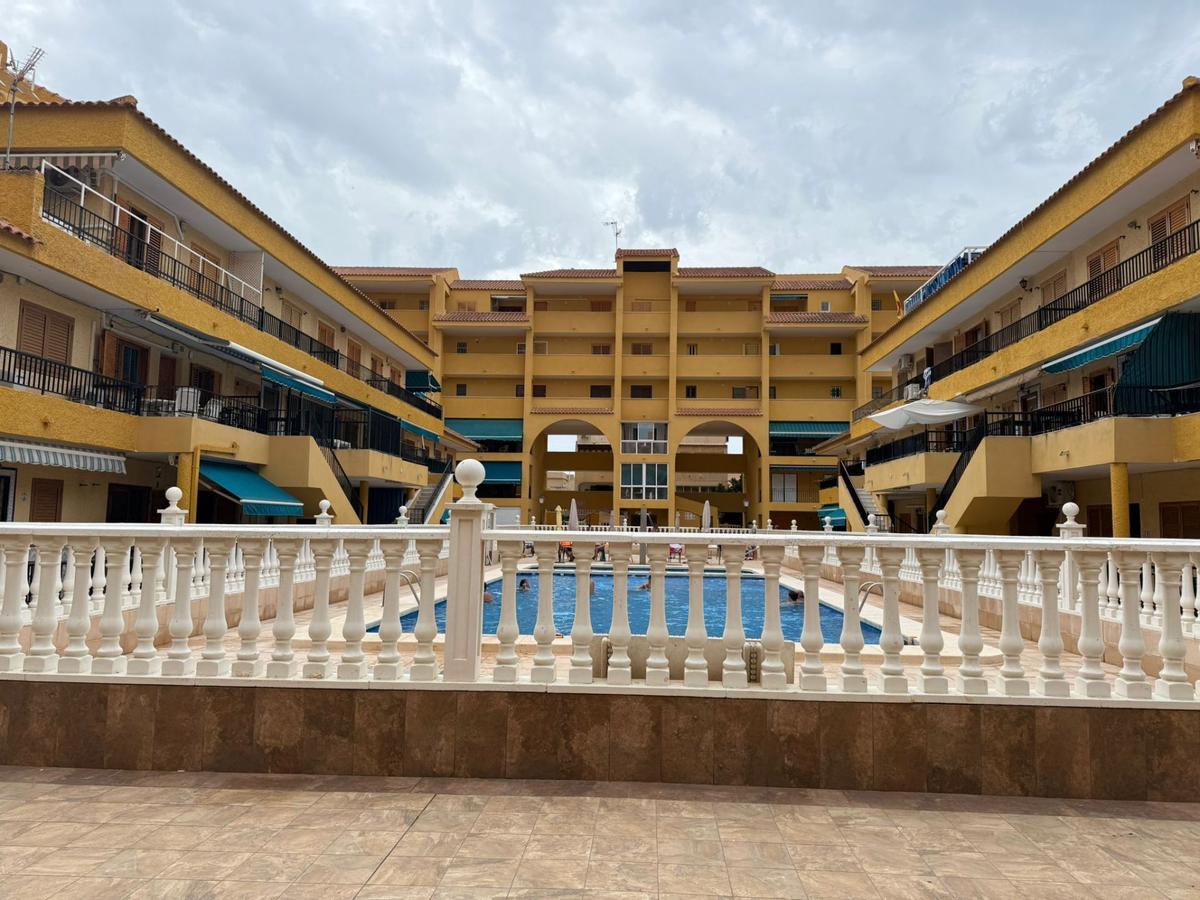
On the Costa Blanca and Costa Cálida the pattern is less concentrated than for the Nordic or British cohorts, but a few towns have accumulated enough Hebrew-speaking neighbours and services to feel settled. In the north of Alicante province the most visible pockets are Altea, Calpe and Moraira, where the buyer profile overlaps with other high-income Europeans and the stock skews to detached villas with sea views. Benidorm and Villajoyosa attract apartment buyers who want urban services and direct beach access without the Marbella price. On the south side, Orihuela Costa and the gated urbanisations around Ciudad Quesada see Israeli buyers who want golf, pool and gated security on a EUR 300,000 to EUR 500,000 budget.
Valencia city itself is the newest magnet. Direct flights from Tel Aviv, a growing international school layer and an urban lifestyle that works without a car have pulled a younger, professional cohort into Ruzafa, Eixample and El Pla del Real. Wesna holds a small catalogue in Valencia; buyers looking for depth of stock on the coast will do better in Alicante province.
Typical price points we see from Israeli buyers in our stocked towns:
| Area | Typical budget | Common property type |
|---|---|---|
| Valencia city | EUR 350,000 to 700,000 | 2 to 3-bed apartment, renovated |
| Altea / Calpe / Moraira | EUR 500,000 to 1,200,000 | Detached villa with pool |
| Benidorm / Villajoyosa | EUR 250,000 to 500,000 | Modern 2 to 3-bed apartment |
| Orihuela Costa / Quesada | EUR 220,000 to 500,000 | Townhouse or villa in gated urbanisation |
| La Manga / Los Alcazares | EUR 200,000 to 450,000 | Apartment or small villa on golf |
What visa and tax paperwork do Israelis need in 2026?
Israeli passport holders enter Spain visa-free for 90 days in any 180-day period under the same Schengen rule as British visitors post-Brexit. That is enough for a buying trip, a signing and a handful of visits per year. It is not enough to live in Spain. For actual residency, the two live routes in 2026 are the Non-Lucrative Visa and the Digital Nomad Visa. The Golden Visa route closed in April 2025 and is history; we cover the alternatives in what replaced the Golden Visa.
The Non-Lucrative Visa suits retirees and anyone with passive income or savings who will not work in Spain. The 2026 threshold is roughly four times the IPREM for the main applicant plus one times IPREM per dependant, documented over twelve months. Full step-by-step in the Non-Lucrative Visa guide.
The Digital Nomad Visa suits salaried employees of a non-Spanish company or freelancers with mostly non-Spanish clients. It allows the Beckham tax regime for the first six years, which caps Spanish-source income tax at 24% up to EUR 600,000. Details in the Digital Nomad Visa guide.
For property-only buyers who will not become residents, the paperwork is simpler but non-negotiable. Every buyer needs an NIE (Número de Identificación de Extranjero) before signing. Israelis can obtain one at the Spanish consulate in Tel Aviv or in Spain directly. See NIE for foreigners in Spain for the current forms and timelines.
On tax, a non-resident Israeli owner pays IBI annually to the ayuntamiento, imputed-income tax on Modelo 210 if the property is not rented, and 24% withholding on rental income (no deductions, since Israel is outside the EU/EEA). The full picture is in annual property taxes for non-residents. Spain and Israel signed a double-taxation treaty in 1999, so tax paid in Spain is creditable against Israeli liability.
How do you move money from Israel to Spain in 2026?
Israeli banks apply strict source-of-funds documentation on outbound transfers, especially above USD 50,000. The receiving Spanish bank will also run its own AML check, and will usually ask for the Israeli bank reference, a translated and apostilled source-of-funds letter, and the signed arras contract or the notary date as justification.
Three practical notes. First, do not send euros via a USD correspondent chain unless you have to; the FX margin is often the biggest cost of the whole transaction. Specialist currency brokers typically beat Israeli retail banks by 0.5% to 1.5% on NIS-EUR conversion, which on a EUR 400,000 purchase is EUR 2,000 to EUR 6,000. Second, open the Spanish non-resident bank account before you start transferring. You will need it for the notary deposit, the mortgage if you take one, and the standing orders for IBI and utilities. Third, build in time. Large Israeli outbound wires can take five to ten business days from compliance request to Spanish IBAN confirmation.
Mortgages for Israeli non-residents are possible but tighter than for EU buyers. Expect 60% to 70% loan-to-value on second homes, rates roughly 0.3% to 0.6% above the resident offer, and full documentation translated to Spanish and often apostilled. Our overview of what to expect sits in the foreigner buyer guide.
What does the local service layer look like for Israelis?
Hebrew-speaking real estate, legal and tax services exist in Spain but concentrate in Marbella, Madrid and Barcelona. Outside those three hubs the working language is English or Spanish. On the Costa Blanca, English is universal in the professional layer; a dedicated Hebrew-speaking lawyer usually works remotely from Madrid or flies in for the notary signing.
Schools matter for families relocating. The Jewish communal schools (Colegio Estrella Toledano in Madrid, Escola Hatikvà in Barcelona, Colegio Alborán in Marbella with a Jewish community link) are the main options. On the Costa Blanca there is no equivalent Jewish day school. Families typically choose British, international or bilingual private schools in Alicante, Benidorm or Calpe and build community life around the synagogue in Alicante, Valencia or Benidorm, or around informal networks.
Flights are the quiet constraint. Direct Tel Aviv to Alicante has been seasonal and operator-dependent. Direct TLV to Valencia and TLV to Barcelona are more reliable year-round. Buyers who insist on direct flights tend to anchor in Valencia or a town within 90 minutes of Barcelona; buyers willing to connect via Madrid or Barcelona have the full Costa Blanca open to them.
Medical cover for non-resident owners is private. The main private insurers (Sanitas, Adeslas, DKV) accept Israeli residents without exclusion if the policy is bought during a visit to Spain and with a Spanish address. For residents, access to the public system is tied to visa type and social security registration.
Total transaction cost on a Spanish purchase sits at 11% to 14% on top of the sticker price, split between transfer tax, notary, land registry, legal fees and the first year of standing charges. The full breakdown is in the total cost of buying property in Spain.
FAQ
Do Israelis need a Spanish visa to buy property? No. The purchase itself requires only a passport and an NIE. The visa question only arises if you want to stay in Spain beyond 90 days in any 180-day period. For longer stays, the Non-Lucrative Visa or Digital Nomad Visa are the current routes.
Is the Golden Visa still available for Israeli buyers in 2026? No. Spain abolished the property-based Golden Visa in April 2025. Residency through investment in Spanish real estate is no longer a route; the live alternatives are the Non-Lucrative Visa and the Digital Nomad Visa.
Can an Israeli buyer get a Spanish mortgage? Yes, but on tighter terms than EU buyers. Expect 60% to 70% loan-to-value, slightly higher rates, and full income and asset documentation translated and apostilled. Pre-approval before house-hunting is standard.
Which Costa Blanca town has the most established Israeli community? No single town dominates. On the Costa Blanca the visible pockets are in Altea, Calpe, Moraira, Benidorm and parts of Orihuela Costa, but numbers remain modest compared to Marbella or Valencia city. Buyers looking for a settled Hebrew-speaking network usually weigh Valencia or Barcelona first.
What is the Spain-Israel tax treaty worth to a buyer? The 1999 double-taxation treaty avoids being taxed twice on the same income. In practice, Spanish taxes paid as a non-resident owner (IBI, Modelo 210, rental withholding) are creditable against Israeli tax liability. Treaty mechanics should be confirmed with an Israeli accountant familiar with Spanish-source income.
Next steps
Start with a shortlist. Browse live stock on the Costa Blanca and Costa Cálida catalogue and send three to five references. We will come back with a realistic view on price, running costs and the visa route that fits before you book flights from Tel Aviv.
Get our Costa Blanca property guides
One short email a month with new neighborhood guides, market notes, and rule changes. No spam, unsubscribe in one click.
We use your email only for the newsletter. Read our privacy policy for details.