
Digital Nomad Visa Spain 2026: Who Qualifies and What Counts as Remote Work
 Wesna Group
Spain's Digital Nomad Visa requires €2,762/month proven remote income, 3+ years of professional experience and max 20% Spanish-source clients. Five-year residency path, Beckham 24% flat tax available. Working 2026 guide to eligibility, process, family rules and common rejection reasons.
Spain's Digital Nomad Visa (DNV) has run under Ley 28/2022, the Startups Law, since 23 December 2022. Three years in, the eligibility rules are stable but mis-read often by applicants. As of mid-June 2026 the working numbers are €2,762/month income minimum, €30,000 health insurance coverage, max 20% Spanish-source clients, and a 5-year residency path that lands you in line for permanent residency. The 24% flat Beckham regime is the lever most applicants underprice. This piece is the legal walk-through: who qualifies, what counts as remote work, what the application actually looks like, and the four reasons most rejections happen.
What the Digital Nomad Visa is and who it covers
The DNV is a national-level Spanish visa created by Ley 28/2022 (Startups Law), Articles 71-76. It authorises non-EU nationals to live in Spain while working remotely for non-Spanish employers, or as freelancers for predominantly non-Spanish clients. EU/EEA nationals do not need this visa (they already have free movement under the Schengen framework); the DNV is built for British, US, Canadian, Australian, MENA, Asian and Latin American applicants.
The legal-residence permit attached to the visa is granted under the Unidad de Grandes Empresas y Colectivos Estratégicos (UGE-CE), the same fast-track unit that handles Beckham-regime employees and intra-company transfers. UGE-CE turnaround is materially faster than the standard Oficina de Extranjería: typical decision time runs 15-20 working days from a complete file, versus 3-6 months for a Non-Lucrative Visa filed at a provincial office.
The DNV is the closest functional replacement for the Golden Visa, which was abolished by Law 1/2025 effective 3 April 2025. It does not require a €500,000 property purchase. It does require provable remote-work income.
Who qualifies in 2026
Five eligibility hurdles, all of which must be met:
1. Remote-work relationship
You must either:
- Be employed by a non-Spanish company, with a contract showing at least 3 months of prior tenure with that employer. The employer must authorise remote work from Spain in writing.
- OR be a freelancer / self-employed, with at least one substantial non-Spanish client and a documented invoice history of at least 3 months.
Spanish-source income is capped at 20% of total. If you invoice a Spanish client for €1,000 and your monthly total income is €5,000, you are at 20% exactly, which is the maximum. €1,001 against the same €5,000 baseline disqualifies you. Track this carefully.
2. Income threshold (2026 figures)
Spain's minimum wage (SMI) for 2026 is €1,221/month gross in 14 payments, equal to €17,094/year. The DNV requires proof of 200% of SMI for a solo applicant. On the monthly basis that is roughly €2,442/month, but UGE-CE applies the figure on a 12-month equivalent of the annual SMI, which lands at approximately €2,762/month for 2026 applicants. Some online sources quote €2,849 or €2,850 depending on payment-schedule interpretation; the safest target to clear the file without delays is to demonstrate €2,850+/month.
Family additions:
| Dependant | Additional income required |
|---|---|
| Spouse or registered partner | +75% SMI (~€1,031/month, rounded up in some files to €1,125/month) |
| Each child (under 18) | +25% SMI (~€344/month, rounded up to €375/month) |
A family of four (two adults + two children) needs to demonstrate roughly €4,500/month combined income. Income can come from both spouses if both have qualifying remote work; otherwise it loads onto the lead applicant.
3. Professional experience or degree
The Startups Law requires 3+ years of professional experience in the field you remotely work in, OR an equivalent university degree (bachelor or higher) from an accredited institution. The 3-year experience track is more flexible and accepts self-employment, contract work, agency work, and traditional employment combined. The degree track is faster to evidence if you have one.
4. Clean criminal record (last 5 years)
You need a criminal-record certificate (Sworn translation into Spanish, apostilled) covering your country of residence for the past 5 years. For UK applicants: ACRO certificate, around £85, 2-week turnaround. For US applicants: FBI background check, around $50, 2-6 week turnaround.
5. Private health insurance
At least €30,000 in medical coverage with a Spanish-licensed insurer (Sanitas, Asisa, DKV, Adeslas, Mapfre Salud, etc.) and no deductibles or co-payments. Travel insurance and EHIC do not qualify. Family-of-four annual policy: typically €1,800-€3,200/year depending on age and pre-existing conditions. Insurance must remain active for the duration of the visa.
How the application actually runs
Two routes, depending on where you start:
Route A: Apply from your home country (1-year visa)
Apply at the Spanish consulate in your country of residence. The visa issued is valid for 1 year. After arrival in Spain you apply for the 3-year residency-permit extension (no further consulate visit needed; renewal handled by the local Extranjería).
Typical 1-year-route timeline:
- Week 1-2: Apostille criminal record, translate to Spanish.
- Week 2-4: Book a cita previa (appointment) at the Spanish consulate (some consulates have multi-month wait lists; London currently runs 6-8 weeks, New York 4-8 weeks, Miami 8-12 weeks).
- Cita day: Submit dossier including passport, photo, criminal record certificate, employment contract or freelance evidence, income proof (bank statements + invoices), health insurance certificate, NIE application form, application fee ~€80-€90.
- Week 5-9: Consulate review. Decision typically within 30 working days for DNV (UGE-CE routes most files); some consulates respond in 10-15 days.
- Visa stamp issued: Pick up passport with visa stamp.
- Within 3 months of arrival: Register at the Spanish town hall (empadronamiento), apply for the TIE residence card.
Route B: Apply from inside Spain (3-year permit)
If you are already in Spain on a tourist stamp, you can apply directly to UGE-CE for the 3-year residency permit. This skips the consulate step entirely.
- Day 1: Enter Spain on a tourist stamp (90 days within 180).
- Within 90 days: Submit DNV application to UGE-CE via the Mercurio platform along with all supporting documents (same dossier as Route A plus proof of legal entry).
- Decision: UGE-CE has a legal resolution period of 20 working days. In practice most clean files resolve in 15-25 working days.
- TIE biometrics: Once approved, book biometrics at the local Extranjería for the TIE card. Typical wait: 4-8 weeks.
- TIE card issued: 3 weeks after biometrics.
Route B is faster overall (~3-4 months total) and lands you a 3-year permit instead of 1-year. The trade-off: you must be physically present in Spain to file. Most professionals we work with prefer Route B if they can arrange a 90-day Spain trip to handle it.
For full timing context on the parallel property purchase remotely, see our separate walk-through; the DNV and a property purchase can run on overlapping tracks if you start both in week one.
Renewal pathway: 5 years to permanent residency
DNV is a 5-year residency path. The mechanics:
| Stage | Duration | How issued |
|---|---|---|
| Initial visa | 1 year (Route A) or 3 years (Route B) | Consulate or UGE-CE |
| First renewal | 3 years | Extranjería (in Spain) |
| Second renewal | 2 years (after first renewal expires) | Extranjería (in Spain) |
| Permanent residency | Indefinite | After 5 years of continuous legal residence |
| Citizenship | 10 years (most nationalities) or 2 years (Spanish-speaking countries) | Ministry of Justice |
To renew at each stage you must continue to meet the income and remote-work requirements. The 20% Spanish-client cap stays applicable across renewals. After 5 years of legal residence (DNV time counts toward this), you qualify for permanent residency, which lifts the remote-work requirement entirely.
The Beckham tax angle (most underused lever)
The Beckham regime (Ley 35/2006, art. 93) was extended to DNV holders by Ley 28/2022. It is a tax election available in your first year of Spanish tax residency. Elect it and you get:
- 24% flat IRPF on Spanish-source income up to €600,000/year (47% above that).
- Foreign-source income exempt from Spanish IRPF. Your US employment income remains taxable only in the US under the double-taxation treaty.
- Wealth tax assessed only on Spanish-located assets (your Spanish property, Spanish bank account) – not your worldwide net worth.
- Election valid for 6 tax years then reverts to standard Spanish IRPF (top rate 47% from €300,000).
For a US software engineer earning $180,000/year via a US employer: zero Spanish IRPF on US income, ~24% on any Spanish freelance side-income, wealth tax only on the Spanish flat. The savings vs the standard Spanish IRPF schedule run €40,000-€60,000/year for €120k+ earners. Across 6 years that is €240,000-€360,000.
You must elect Beckham within 6 months of starting Spanish tax residency (typically the moment you cross 183 days of Spanish presence in a calendar year). Late election locks you out. This is where most DNV applicants leave money on the table.
For the post-arrival tax mechanics on any Spanish property you buy, our Modelo 210 guide covers the imputed-income and rental-income filings.
Family rules (often misread)
The lead applicant can include their spouse / registered partner and dependent children under 18 on the same application. Adult children (18+) and parents are NOT eligible as dependants under the DNV (unlike the Non-Lucrative Visa).
Same-sex married partners qualify with the lead applicant if the marriage is recognised in Spain or in the country of origin. Civil partnership (registered) also qualifies but the registration certificate must be apostilled and translated.
Children's documents: full birth certificates apostilled and translated, plus passport. School-age children should be enrolled in a Spanish school within 3 months of arrival (international schools also count). Vaccination certificates are required for children under 6.
Five reasons applications get rejected
Based on UGE-CE 2024-2025 rejection statistics published by immigration practitioners, the top rejection grounds in 2026 are:
- Income volatility. Bank statements showing erratic month-to-month income (€800 one month, €4,000 the next, €1,200 the next) get rejected even when the 12-month average clears the threshold. UGE-CE wants stable monthly proof. Build 6 months of consistent statements before applying.
- Insufficient experience documentation. The 3-year experience requirement is strict. Self-employment counts but needs documented evidence: invoices, contracts, tax returns. "I've been a freelancer for 3 years" without paper trail = reject.
- Spanish-source income exceeded. The 20% cap is applied case-by-case. Side gigs for Spanish clients invoicing more than 20% of monthly total = reject.
- Health insurance with co-payments or geographic limits. Spanish-licensed but with deductibles, co-pays, or "Spain only" geographic scope (not full Schengen / worldwide) gets rejected.
- Criminal-record certificate scope errors. You need certificates covering every country you have lived in for 6+ months over the last 5 years. UK-only certificate when you spent 18 months in Singapore in 2022 = reject.
All five are avoidable with proper preparation. The DNV is a permissive visa for applicants who actually qualify and a strict one for applicants who hope to "stretch" their case.
Cost summary
| Line | Amount |
|---|---|
| Consulate visa fee (Route A) | €80-€90 |
| UGE-CE application fee (Route B) | €73.26 |
| TIE residence card fee | €16.08 |
| Apostille of criminal record (per country) | €30-€110 |
| Sworn Spanish translation (per document) | €80-€180 |
| Health insurance (single, annual) | €700-€1,200 |
| Health insurance (family of 4, annual) | €1,800-€3,200 |
| Immigration lawyer (optional, end-to-end) | €1,200-€2,500 |
| Beckham election filing (year 1) | €350-€550 (handled by tax-rep abogado) |
| Total realistic year-1 setup | €2,500-€4,500 excluding ongoing tax filings |
FAQ
Can I bring my US LLC to Spain on the DNV?
You can operate your US LLC remotely from Spain. The LLC remains a US-tax entity and you continue to file US returns. On the Spanish side, your personal income from the LLC is taxed under either Beckham (24% flat for 6 years if elected in time) or standard Spanish IRPF (progressive scale). The LLC itself does not need to register in Spain unless you start serving Spanish clients above the 20% cap, at which point it would need a Spanish branch.
Can I buy a Spanish property on the DNV?
Yes. The DNV does not restrict property purchase. Many DNV holders buy a Spanish home as part of arrival planning. For the property-purchase mechanics see our combined DNV + property purchase guide and our Spanish mortgage walk-through for non-residents. For remote closing if you are still abroad during the property purchase, see Buying Spanish property remotely with power of attorney.
How long can I leave Spain during the DNV residency?
Up to 6 months in any 12-month period without losing the residency permit. Stays of 90+ days outside Spain should be documented (work travel, family emergency, etc.) in case Extranjería asks at renewal time. The 5-year clock toward permanent residency keeps running provided your absences stay below 10 months total across the 5 years (or 6 months in any single year).
Do I need to learn Spanish?
Not for the DNV itself. There is no Spanish-language test for DNV applicants, dependants or renewals. For Spanish citizenship (after 10 years of legal residency, or 2 years for Spanish-speaking-country nationals) you need to pass the CCSE and DELE A2 exams. Most DNV holders pick up Spanish naturally over the 5 years.
Can a UK retiree on a pension use the DNV?
No. The DNV requires active remote-work income. Passive income (pension, rental, dividends) does not qualify. UK retirees should use the Non-Lucrative Visa (NLV) instead, which is built around passive-income proof.
What happens if my employer changes during the visa?
You must notify the Extranjería within 30 days. The new employment relationship must still meet the DNV criteria (non-Spanish employer, 3+ months tenure or equivalent contract authorising remote Spain work). A short gap between jobs (under 60 days) is generally tolerated. Longer gaps risk non-renewal.
What we do for DNV applicants planning a property purchase
Many of the buyers we work with run DNV and property purchase as parallel tracks. Three concrete services:
- Visa-eligibility pre-check. Before you spend on apostille translations and consulate cita fees, we run your income profile, contract structure and household composition against the 2026 DNV threshold and flag documentation issues. Free for buyers we are actively shortlisting properties for.
- NIE + Spanish bank account setup remotely. Our partner abogados in Valencia and Torrevieja file your NIE through the local Spanish consulate so it arrives ready before your DNV cita. We coordinate the Spanish bank account opening (Sabadell, Santander, BBVA or Unicaja) without you needing to fly out.
- Beckham election filing + ongoing tax-rep. Our partner tax abogados handle the first-year Modelo 151 Beckham election within the 6-month deadline (the line where most DNV holders lose serious money). Annual flat-fee €350-€550 thereafter.
Concrete property anchors for typical DNV buyer profiles in our current inventory:
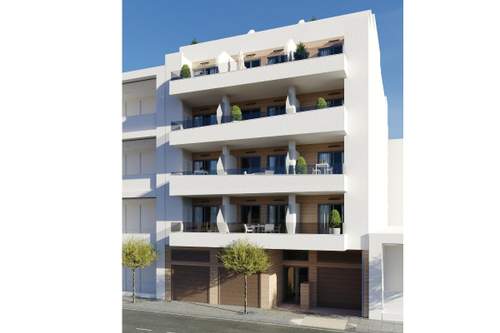
- Valencia capital, balanced city-life setup: WG-18 – 2 Bedroom Valencia Apartment, 120 m², €238,000 ★ featured, our own-stock in the city centre that fits a remote-working couple with frequent flights from Manises airport.
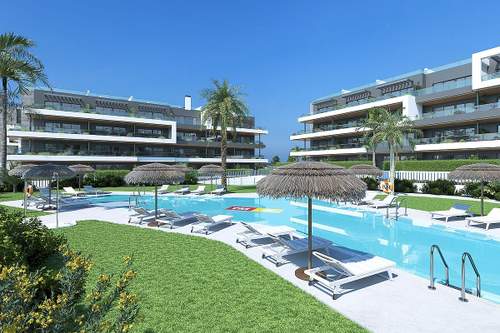
- Costa Blanca North, lifestyle setup: WG-12 – 3 Bedroom Altea Hills Detached Bungalow, 117 m², €350,000 ★ featured, gated-community entry-tier near Calpe and Benidorm airports.
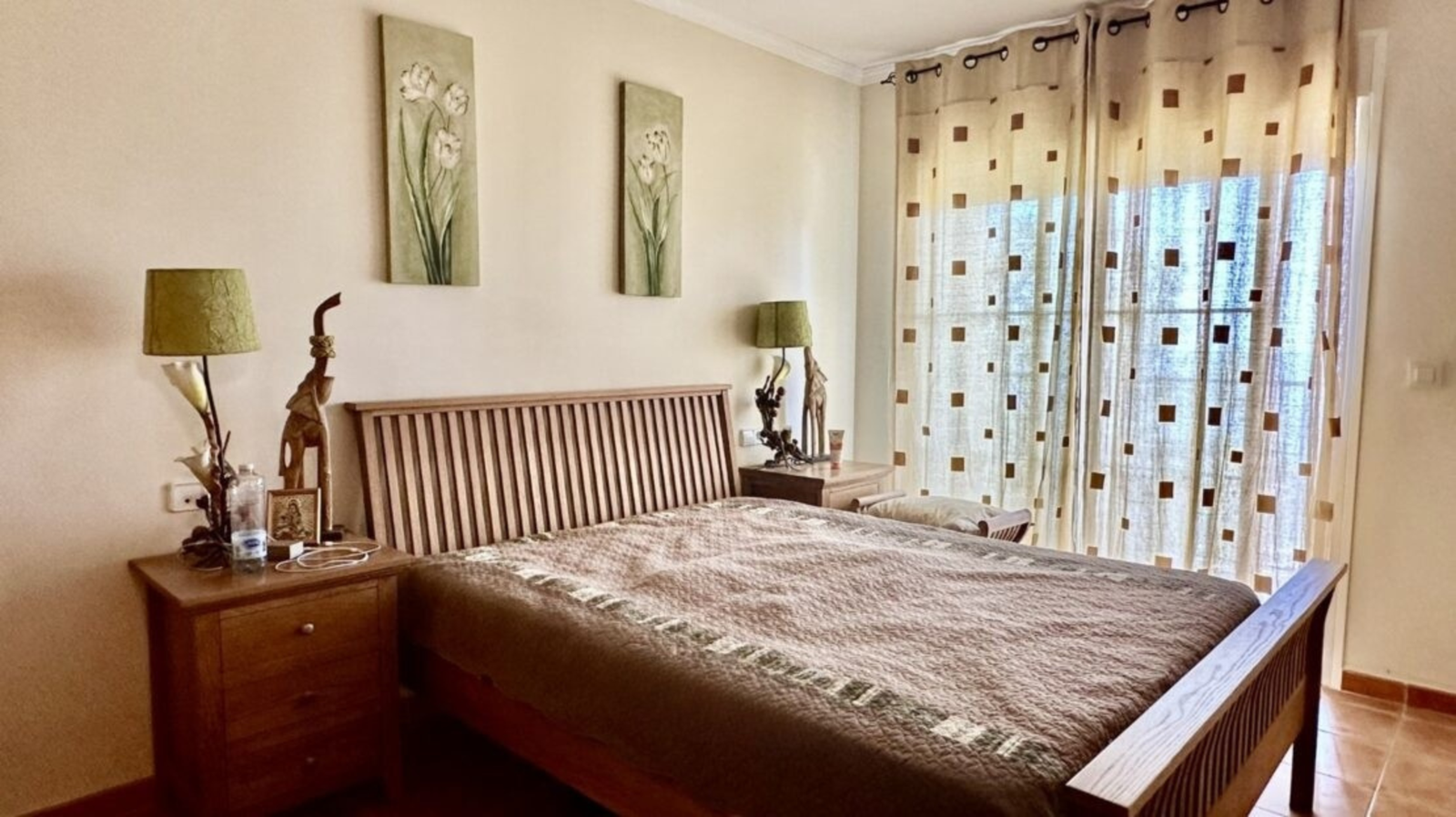
- Costa Blanca South, yield + lifestyle combo: WG-16 – 1 Bedroom Algorfa Penthouse with golf access, 53 m², €159,000 ★ featured, close to La Finca Golf and beach within 15 min drive.
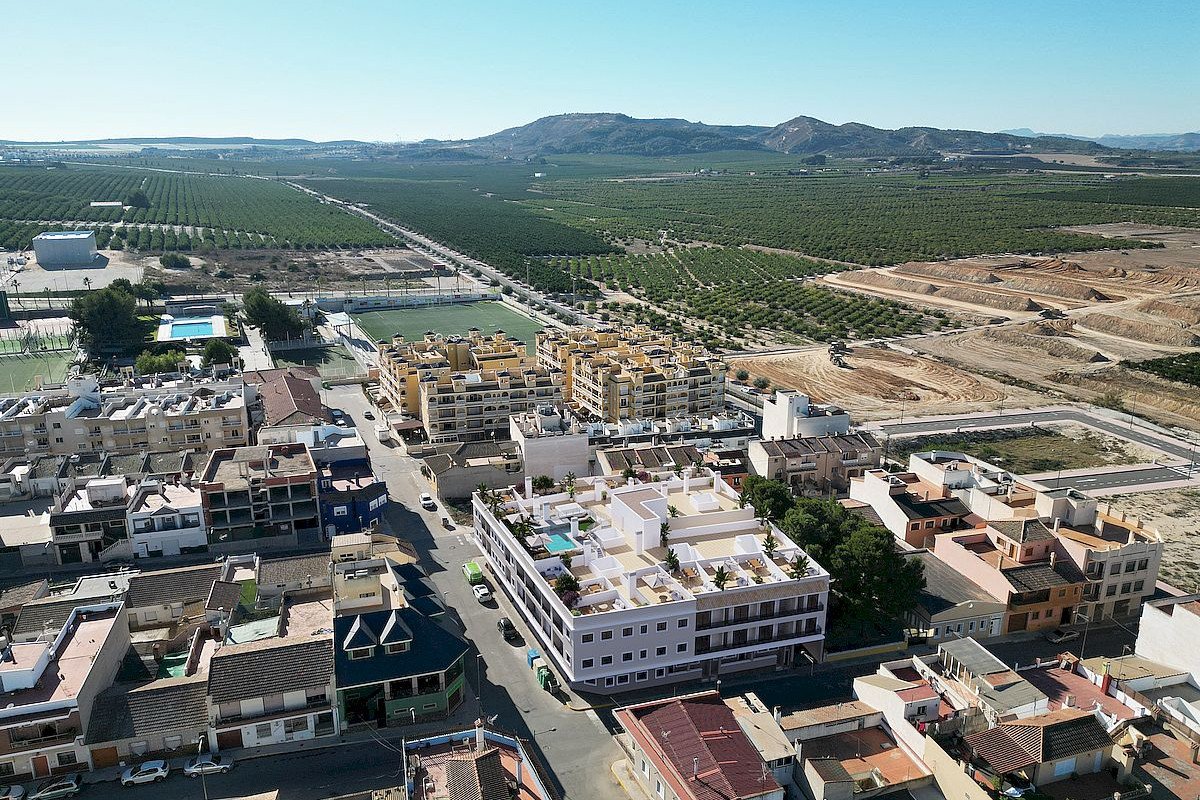
For wider catalog options matching the DNV-buyer profile (longer-term holds, Costa Blanca North good-internet zones), browse our 20 active Denia listings (€260k-€680k mix of apartments and houses).
Read next
- Investing in Spanish coastal property 2026: a working guide for foreign buyers. The bigger macro picture: yields, growth, four cost lines.
- Modelo 210 explained: non-resident tax on Spanish property 2026. What you pay on the property side after arrival.
- Spanish Digital Nomad Visa + property combo 2026. The companion piece focusing on the property-purchase + DNV combined math.
- Capital growth: which Spanish coastal towns beat inflation 2020-2026. Where to point a 5-10 year hold if you buy on arrival.
- Buying property in Spain as a foreigner. The full 9-step process with timelines and costs.
If you want a one-page eligibility memo on your specific case (country, gross income, household composition, target property bracket), send us your profile and we return your DNV fit-check plus property shortlist within 24 hours.
By Oleg Fesechko, founder of Wesna Group.
Get our Costa Blanca property guides
One short email a month with new neighborhood guides, market notes, and rule changes. No spam, unsubscribe in one click.
We use your email only for the newsletter. Read our privacy policy for details.