
Spanish Coastal Property Invest 2026: 6.7% Yield + Growth
 Wesna Group
Spain gross rental yields closed Q1 2026 at 6.7%, prices +6.2% YoY. Costa Blanca municipalities ran +7.8-9.4%, beating Northern Europe rental yields by 200-400 basis points. Golden Visa ended Apr 2025. 3 buyer profiles, 4 cost lines, 4 non-resident mortgage banks. The 2026 framework.
Spanish residential property delivered a 6.7% gross rental yield in Q1 2026, according to Idealista's quarterly rentabilidad report. The headline hides a wide spread: Murcia capital at 7.5%, Castellón at 7.2%, Madrid at 4.7%, Barcelona at 5.2%. For a foreign investor pricing an entry in 2026, geography matters more than it did five years ago. The Golden Visa is gone (Law 1/2025, effective 3 April 2025), financing has tightened, and rental regulation differs sharply between regions. Here is a working framework for choosing where on the Spanish east coast foreign money still makes sense in 2026.
The 2026 macro picture
Three numbers from the most recent quarterly data set the scene:
- House prices: +6.2% YoY (Bank of Spain Q1 2026). Coastal markets ran ahead of the national average. Costa Blanca municipalities recorded +7.8% to +9.4% depending on town.
- Gross rental yields: 6.7% national average. The east coast still beats that line in Murcia, Castellón and parts of Costa Cálida. Madrid and Barcelona trail.
- New-build supply: thin. The 2024-2025 building cycle delivered fewer homes than 2007-2008 by a wide margin, so the new-build premium is sticky in towns like Denia, Calpe and Pilar de la Horadada.
The trade-off has not changed: coastal Spain offers steady mid-single-digit gross yield with strong capital growth, in exchange for friction (NIE registration, non-resident tax, comunidad fees that surprise newcomers). For a foreign investor with a 5-10 year hold horizon and a willingness to engage a local property manager, the math still works in 2026.
What changed after the Golden Visa ended
Law 1/2025 abolished the Spanish Golden Visa with effect from 3 April 2025. No new residency-by-property-purchase applications are accepted. Existing holders keep their permits and renew under the prior rules.
Practical implications for new foreign investors in 2026:
- No residency in exchange for a €500,000+ buy. Investment-led residency now requires the Non-Lucrative Visa (passive income proof), the Digital Nomad Visa (remote-work employment proof), or the Entrepreneur Visa (business plan + economic-interest approval).
- Property remains buyable by any non-resident without residency. The purchase process is identical: NIE, lawyer, notary, registry. Only the residency-bundling option has gone.
- Repositioning matters. The Golden Visa pulled high-end buyers toward €500,000+ stock to clear the threshold. With that lever gone, the €280,000-€450,000 mid-market regained price-tension relative to the premium tier.
For most foreign investors in 2026, the lost Golden Visa is a paperwork rearrangement rather than a deal-breaker. Capital flows have not stopped; they have re-routed to mid-market apartments and townhouses where actual rental demand sits.
Yield versus capital growth: where each lives
A simple decision matrix for 2026:
| Goal | Best fit region | Indicative gross yield | Indicative 5-yr capital growth |
|---|---|---|---|
| Maximum cash yield | Murcia interior, Castellón, Costa Cálida inland | 6.5% - 7.5% | Moderate (+15-22%) |
| Balanced yield + growth | Costa Blanca South (Torrevieja, Orihuela) | 5.5% - 6.5% | Strong (+25-35%) |
| Capital growth + lifestyle | Costa Blanca North (Denia, Javea, Moraira) | 3.8% - 5.0% | Strongest (+30-42%) |
| Defensive / liquidity | Valencia capital | 4.8% - 5.8% | Solid (+20-28%) |
These bands describe a 2-bed apartment held on a long-term contract (contrato de arrendamiento de vivienda). Short-term holiday-let yields run higher on the gross line and lower on the net line once management and seasonality are priced in. Run the net-yield math with realistic occupancy and a 25-30% all-in cost stack before you offer.
Concrete starting points by goal across our current inventory:
- Pure cash yield (Murcia interior): WES-2429 €78k 1-bed Avileses apartment (45 m², close to El Valle Golf, long-let target €430-€520/month gross), or WES-2429C €139k 3-bed family apartment (96 m²).
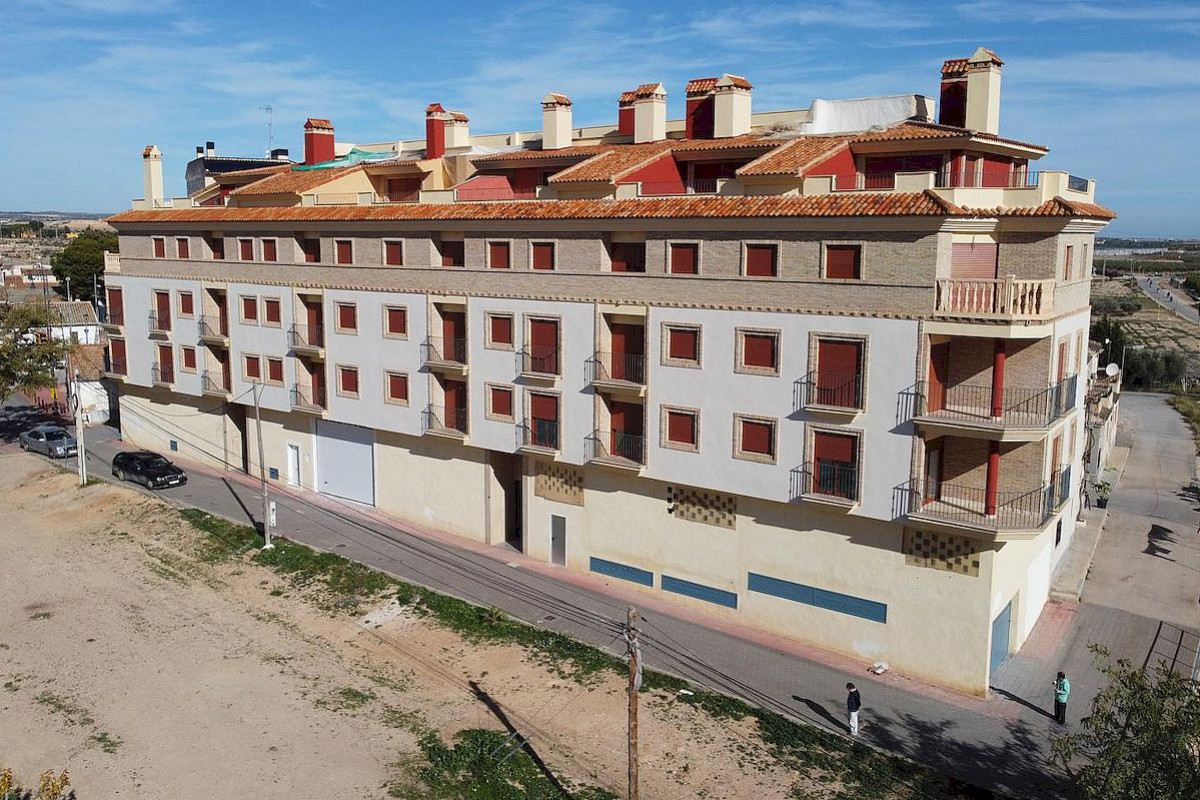
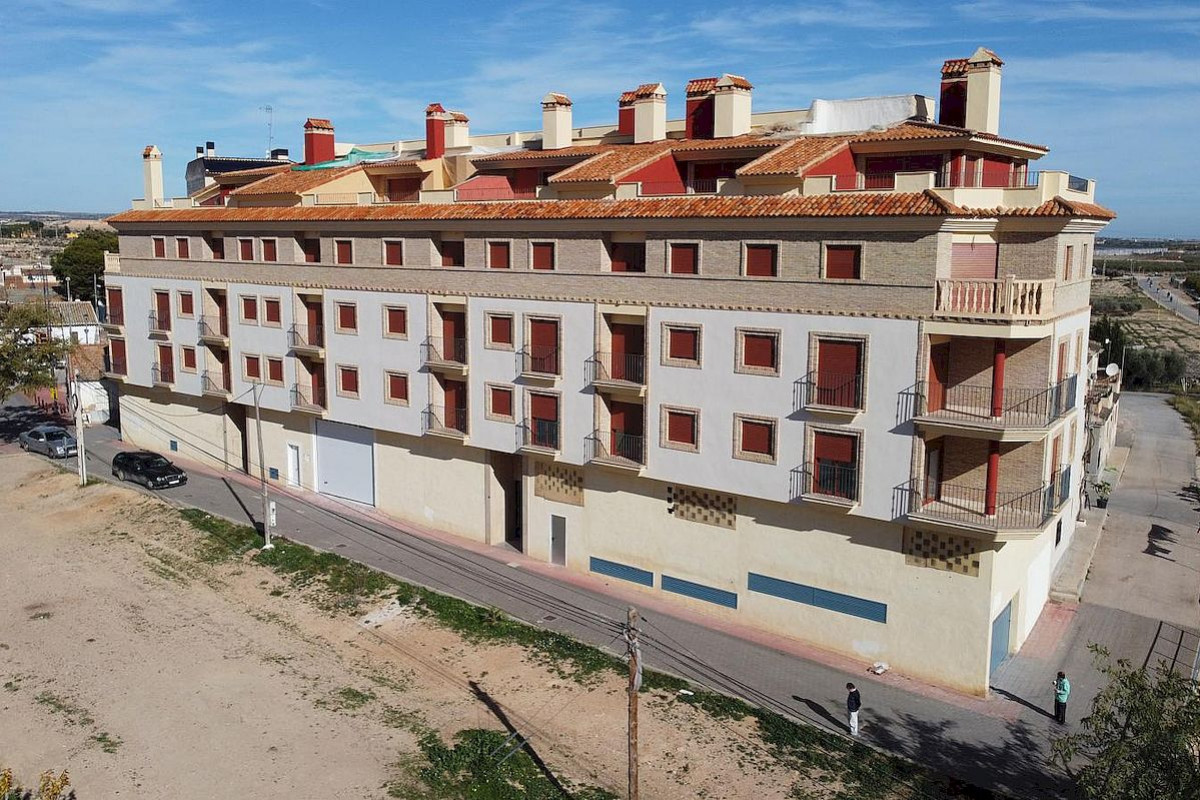
- Balanced (Torrevieja / Costa Blanca South): WES-18039-rev €130k 2-bed Torrevieja apartment (59 m²), WG-14 €155k Torrevieja apartment.
- Pilar de la Horadada border: WES-2006 2-bed apartment in Pilar de la Horadada, WES-2462B €265k 2-bed maisonette.
Want a 5-property yield-ranked shortlist for your budget? WhatsApp us your max ticket and target yield and we will return five matches with gross yield, comunidad and IBI numbers within 4 hours.
The four cost lines foreign investors get wrong
Spanish purchase costs are heavier than what UK, US or northern-European investors model in by default:
- Transfer tax (ITP) or VAT (IVA) + AJD. On a resale, ITP ranges 6-10% by region (Comunidad Valenciana sits at 10% for 2026). On a new build, IVA is 10% plus AJD around 1.5%. This is the biggest single cost. Budget 11.5-12% on top of the purchase price.
- Notary, registry, lawyer. Fixed lines, roughly €2,500-€4,500 combined on a €250,000 purchase. Lawyer is non-optional in practice. Spanish conveyancing was not designed for self-representation.
- NIE + bank account setup. €15-€25 NIE fee, then €0-€200 for a non-resident account. Required to receive rent and pay utilities under your name.
- Comunidad fees + IBI + non-resident tax (IRNR). Comunidad runs €60-€220/month depending on the build. IBI is the council tax, paid annually. IRNR (Modelo 210) is 19% of net rental income for EU/EEA residents, 24% flat for non-EU. IBI is small (€350-€1,400/year on a typical apartment). IRNR is the line that catches US, UK and Asian-domiciled investors by surprise.
Run your specific purchase through our calculator before you commit to a price. Small price differences shift after-cost yield more than buyers expect.
Financing in 2026: what non-residents get
Spanish mortgage rates for non-residents in mid-2026 run 3.4% - 4.6% fixed depending on bank, LTV and term. Four main lenders write non-resident loans:
- Santander. Largest non-resident book, LTV up to 70%, 25-year term.
- Sabadell. Similar profile, sometimes more flexible on documentation for UK/US W-2 buyers.
- BBVA. Slightly tighter underwriting, slightly better rates for high-LTV applicants with strong income.
- Unicaja. Strongest in Andalusia and Murcia, friendly to Costa Cálida buyers.
LTV ceiling for non-residents is 65-70% (vs 80% for Spanish residents). Loan-to-value above 70% requires either a Spanish-resident co-borrower or a substantially higher rate. Read our 2026 mortgage walkthrough for the full negotiation playbook.
Three buyer profiles, three playbooks
A working framework based on actual 2026 transactions we have walked through:
The retiree-investor (UK / IE / NL, age 55-65, €250,000-€450,000 budget). Buys a 2-bed apartment in Costa Blanca South or Costa Blanca North for personal use 3-4 months a year, lets short-term the rest. Yield is secondary; lifestyle and family use matter. Target: Torrevieja (cheaper), Calpe (better climate), Denia (better food). Avoid: inland Murcia (insufficient lifestyle infrastructure).
The pure-yield investor (any nationality, €120,000-€220,000 budget). Buys a 2-bed apartment in Murcia interior or Castellón for full-time rental. Never sets foot in the property after closing. Uses a Spanish property manager (€90-€150/month flat or 10% of rent). Target: Murcia capital, Cartagena, Castellón. Avoid: holiday-resort towns (occupancy too seasonal).
The growth-and-status buyer (US / MENA / Asia, €600,000-€2M+ budget). Buys a detached villa or large duplex in Las Colinas, La Sella, Sierra Cortina or Marina Alta. Aims for capital appreciation plus seasonal personal use; rental income is incidental. Holding horizon 7-10 years. Target: gated resort communities or established high-value zones (Moraira, La Sella, Las Colinas). Avoid: investment-grade apartment stock (wrong product).
What we do for foreign investors
A fully bilingual buying service for non-residents (English, Russian, Ukrainian, Spanish). Practical coverage:
- Property shortlisting against your buy thesis (yield-led, growth-led, lifestyle-led). We refuse to send 50 listings when 5 actually fit.
- Comunidad and IBI due diligence before you fly out. We pull the past two years of community minutes, IBI history and any pending special-levy votes.
- Lawyer coordination with our partner abogados. Sign the power of attorney before you fly and we close on your behalf. Common for non-resident buyers who cannot fit two trips into one calendar.
- Post-purchase setup. Utility transfers, IBI direct debit, property-management referral, Modelo 210 quarterly filing referral. Two or three trusted partners depending on the town.
For a specific listing on yield, growth and after-cost economics before you offer, send us the link and we will run it under your tax status, target hold period and financing plan.
Read next
- Where rental yields beat 6% on the Spanish coast in 2026. Town-by-town yield breakdown.
- Spanish mortgages for non-residents 2026. The four lender banks, rate ranges and negotiation levers.
- Spain Property Tax Calculator. Plug in your specific purchase price for the full closing-cost breakdown.
- Golf properties on the Costa Blanca and Costa Cálida 2026. The growth-and-lifestyle play around the southern resort belt.
Want a 30-min investor consult? Book a free strategy call and we walk you through current Costa Blanca / Costa Cálida inventory matched to your yield, growth or lifestyle target.
By Oleg Fesechko, founder of Wesna Group.
Get our Costa Blanca property guides
One short email a month with new neighborhood guides, market notes, and rule changes. No spam, unsubscribe in one click.
We use your email only for the newsletter. Read our privacy policy for details.