
Heating in Spain 2026: Aerotermia, Pellet and the A/C You Already Have
 Wesna Group
A 90 m2 Costa Blanca flat needs about 2,000 kWh of heat a year, and the reversible A/C already on the wall delivers it for roughly EUR 115. Aerotermia costs EUR 9,000 to EUR 16,000 to retrofit and saves almost nothing on that bill. Here is what each option actually costs.
Your flat on the Costa Blanca needs about 2,000 kWh of heat a year, almost all of it between December and February. The reversible air conditioner already on the wall delivers that for roughly EUR 115 of electricity. Every other option costs more to run, more to install, or both.
Why Spanish homes on the coast have no heating
Alicante averages 11 to 12 degrees in January and the heating season runs about ninety days. Nobody built radiators into a 1980s coastal apartment because for three quarters of the year they would sit idle, and the Spanish building code did not ask for them. Central heating in Spain is a Madrid and Burgos thing, not a Torrevieja one.
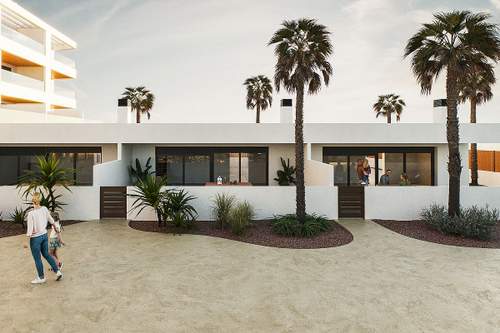
What changed is the code, not the weather. Real Decreto 732/2019 rewrote the energy section of the Codigo Tecnico de la Edificacion, and meeting it on a new build is far easier with a heat pump feeding underfloor pipes than with anything else. So a 2026 obra nueva usually arrives with aerotermia fitted, and a 1995 resale two streets away has a gas bottle in the kitchen and a split unit in the lounge. The difference between new build and resale shows up in the utility bill long before it shows up in the survey.
What 2,000 kWh of heat costs, five ways
Start from the heat, not the appliance. A reasonably tight 90 m2 flat on the coast wants 15 to 25 kWh per m2 a year for space heating. Take the middle and call it 2,000 kWh delivered into the rooms. Electricity at EUR 0.20 per kWh all in, pellets at EUR 6 a 15 kg sack, butane at the regulated bottle price.
A heat pump does not make heat, it moves it, which is why the first two rows are cheaper than the last. A seasonal coefficient of 3.5 means one unit of electricity in, three and a half units of heat out.
| Option | Electricity or fuel | Running cost a year | Fitted cost |
|---|---|---|---|
| Reversible split A/C, SCOP 3.5 | 570 kWh | EUR 115 | EUR 700 to 1,200 per room |
| Aerotermia, SCOP 3.8, water based | 525 kWh | EUR 105 | EUR 9,000 to 16,000 retrofit |
| Pellet stove, 85% efficient | About 490 kg, 33 sacks | EUR 200 | EUR 1,800 to 3,500 with flue |
| Butane catalytic heater | About 15 bottles | EUR 260 to 290 | EUR 60 to 150 |
| Electric panel or oil radiator | 2,000 kWh | EUR 400 | EUR 400 to 900 |
The spread in running cost is EUR 285 a year between best and worst. The spread in fitted cost is fifteen thousand euros. That ratio is the whole argument.
Aerotermia: right on a new build, hard to justify as a retrofit
Aerotermia is an air to water heat pump. It heats a tank for your taps and a loop for underfloor pipes or low temperature radiators, and most units run in reverse for cooling. On a new build it is already in the price and it is the reason the energy certificate reads B rather than E.
As a retrofit it is a different proposition. You are paying EUR 9,000 to EUR 16,000 to save EUR 10 a year against the split unit you already own, because both are heat pumps with nearly the same coefficient. The case for it is never the space heating bill. It is hot water, which runs all year and is where a resale flat with an electric immersion tank quietly spends EUR 300 to EUR 450, and it is comfort: warm floors instead of a fan blowing at head height.
If you are gutting the place anyway, add it to the renovation budget while the floors are up. Retrofitting underfloor pipes on their own, into a finished flat, means lifting every floor in the house.
Pellets, butane and the two things people get wrong
A pellet stove is the one option that beats a heat pump on feel. It throws real radiant heat, it works in a power cut if it has a battery backup, and a 15 kg sack costs about EUR 6. It also needs a flue through an external wall or roof, which in an apartment means the comunidad has to approve it, and in many buildings the answer is no.
Butane looks cheap because the bottle is cheap. A 12.5 kg bombona is regulated by the government and reviewed every two months, and a catalytic heater burns one in roughly a week of real use. Fifteen bottles a year is EUR 260 to EUR 290, carried up the stairs one at a time. The real problem is not the money. An unflued catalytic heater puts every gram of its combustion water into your living room, which is how a coastal flat with shuttered windows grows mould on the north wall by February.
The second mistake is heating the whole flat. Spanish apartments are built to shed heat, not hold it, and the terrace door leaks more than the walls do. One split unit in the room you actually sit in, on a timer, beats four electric radiators everywhere.
What to check before you buy
Open the energy certificate first. The letter is a rough guide, but the second page lists the installed heating and hot water systems by name, and it will tell you whether that villa has aerotermia or an immersion tank pretending to be one.
Then count the outdoor units on the facade. A single split serving one room is a EUR 900 problem to extend. No units at all, on a resale with tiled floors and no visible pipework, means every room you want heated is a separate install. We publish the full annual running cost of a Benidorm apartment. There is a companion breakdown for a Denia property. Both put heating next to the community fee and the IBI, which is where it belongs.
In a community, ask for the statutes before you plan anything with a flue or a new outdoor unit on the facade. Both usually need a vote.
FAQ
Is aerotermia worth it on the Costa Blanca?
On a new build, yes, because it is already installed and it is doing the hot water as well as the heating. As a retrofit purely for heating, no: you would spend EUR 9,000 or more to beat a reversible split by about EUR 10 a year. Retrofit it when you are renovating anyway, or when the hot water system is due for replacement.
Can I use my air conditioning as a heater?
Yes, if the unit is reversible, and nearly all split units sold in Spain in the last twenty years are. The heat symbol on the remote is usually a sun or the word CALOR. It is the cheapest heat in the table above and you have already paid for the hardware.
How much does it cost to heat a 90 m2 flat in Spain for a winter?
About EUR 115 with a reversible split unit, about EUR 200 with a pellet stove, about EUR 400 with electric radiators. Those assume roughly 2,000 kWh of delivered heat over a ninety day season and EUR 0.20 per kWh. A draughty flat with single glazing can easily double the demand.
Do I need permission to install a pellet stove in an apartment?
Almost always. The flue has to reach outside air, which means passing through a facade or a communal shaft, and both are community property under the Ley de Propiedad Horizontal. Ask for the statutes and the last minutes before you buy the stove, not after.
Next steps
Send us two or three reference numbers and we will read the energy certificate on each one, count the existing units and tell you what heating those rooms would actually cost you in January. Start at contacts. Or open the full catalogue.
Get our Costa Blanca property guides
One short email a month with new neighborhood guides, market notes, and rule changes. No spam, unsubscribe in one click.
We use your email only for the newsletter. Read our privacy policy for details.