
Dutch Families on Costa Blanca 2026: Towns That Actually Work
 Wesna Group
Roughly 3.5% of foreign property sales in Spain in 2025 went to Dutch buyers, and a large share cluster in a 40 km stretch between Denia and Altea. Here is where Dutch families settle, why, and what a purchase costs in 2026.
Roughly 3.5% of foreign property sales in Spain during 2025 went to Dutch buyers, per figures from the Consejo General del Notariado and Registradores de España. That is around 4,500 transactions, and a disproportionate share landed in a 40 km stretch of Costa Blanca North between Denia and Altea. This guide is for Dutch families weighing the same move in 2026.
Wesna is based in Valencia and works across the Costa Blanca and Costa Cálida. We speak English and Spanish in the office. We do not have a Dutch speaker on staff, but the Dutch buyers we work with rarely need one: English is enough for legal work here, and the local service layer around the Marina Alta already runs in Dutch.
How many Dutch families bought on the Costa Blanca in 2025?
Dutch nationals sat between the eighth and tenth largest foreign buyer group in Spain across 2024 and 2025, depending on which quarter you look at. The Registradores foreign buyer series puts Dutch purchases at roughly 3 to 4% of the foreign total, well behind British, German and French volumes, but consistent and growing since 2022.
Geographically the pattern is narrow. Alicante province absorbs more than half of Dutch purchases nationwide. Within Alicante, four postcodes do the heavy lifting: Denia, Javea (Xabia), Moraira and Calpe, with a secondary cluster around Altea and Alfaz del Pi. Torrevieja and Orihuela Costa, which dominate British and Belgian statistics, barely register in Dutch data.
Family buyers, meaning couples with school-age children rather than retirees, skew even harder toward Denia and Javea, because that is where Dutch-language schooling sits.
Where do Dutch families cluster on the Costa Blanca?
Six towns take almost all the family traffic. Two are firmly stocked in our catalogue, two are stocked lightly, and two we do not hold at all. Below is where each one sits.
| Town | Dutch profile | Wesna stock 2026 | Entry price |
|---|---|---|---|
| Denia | Largest Dutch family base | 24 listings | from EUR 249,000 |
| Javea (Xabia) | Densest Dutch community | None held | n/a |
| Moraira | Older families, pre-retirees | None held | n/a |
| Benitachell / Cumbre del Sol | Alternative to Moraira | 4 listings | from EUR 473,000 |
| Calpe | Working town with beach | 12 listings | from EUR 373,000 |
| Alfaz del Pi / Altea | Secondary cluster | 10 + 1 listings | from EUR 149,000 |
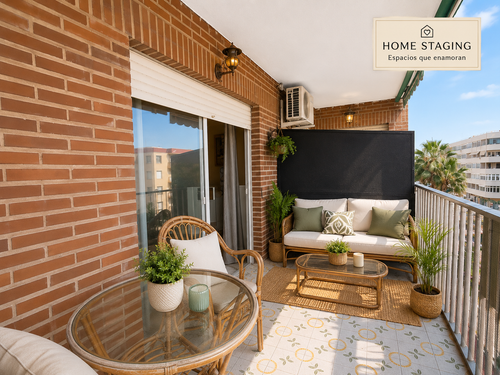
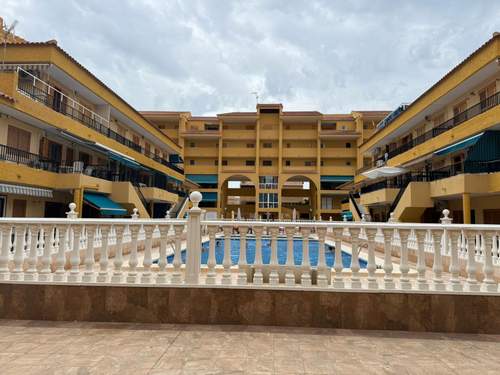
Denia. The Marina Alta's largest town and the most common Dutch family base. Direct ferry to Ibiza and Formentera, a year-round centre, and the Vergel and Els Poblets suburbs to the south hold the highest concentration of Dutch residents in the province. We list around 24 sale properties here in 2026, from a EUR 249,000 semi-detached in Vergel (WES-2482) up to villas over EUR 675,000. For the sub-areas see our Denia, Vergel and Les Marines guide, and for family-size stock the piece on three-bedroom property in Denia.
Javea (Xabia). The single most Dutch town on the coast, particularly the Arenal and Montgo areas. Wesna does not hold Javea stock in 2026. If Javea is the target we will source through partner listings or point buyers to the closest comparable areas we do cover, which are Denia and Benitachell.
Moraira and Benissa coast. Quiet, higher price point, popular with older Dutch families and pre-retirees. We do not hold Moraira listings directly. We do carry Benitachell and the Cumbre del Sol gated resort next door, four units in 2026 from EUR 473,000 for a two-bedroom apartment (WES-1441B).
Calpe. A working town with a beach and the Peñon de Ifach. Dutch families with children in Dutch-language supplementary schools often pick Calpe over Javea for shorter school runs. We hold twelve Calpe listings, though the entry point sits higher than Denia; two-bedroom apartments start around EUR 373,000.
Altea and Alfaz del Pi. Further south, more Norwegian than Dutch, but with a solid Dutch presence around Altea Hills. Ten Alfaz del Pi listings in stock in 2026, starting near EUR 149,000 for smaller apartments. Altea Hills has one villa on the books at EUR 350,000 (WG-12).
If your budget pulls you south of Benidorm, be honest about the trade. Dutch social infrastructure thins fast past Villajoyosa. It exists in Torrevieja, but it is Dutch retirees, not families with kids.
What paperwork does a Dutch family need to buy in Spain in 2026?
Less than most non-EU buyers. The Netherlands is an EU and Schengen member, so no visa is required to buy property, to live in Spain, or to enrol children in school. Paperwork is still not optional.
NIE (Número de Identificación de Extranjero). Required for every adult on the deed and for the tax filings that follow. Dutch buyers usually apply at the Spanish consulate in The Hague or in person once in Spain. Timelines run 2 to 6 weeks. See our NIE guide for foreigners for the current process.
EU registration certificate (Certificado de Registro de Ciudadano de la Unión). If your family will live in Spain for more than 90 days at a stretch, each adult must register at the Extranjería office within three months of arrival. Proof of health cover and sufficient means are checked. This is the residency mechanism for EU nationals and it replaces any visa. The old Golden Visa route was abolished in April 2025, but Dutch buyers never needed it anyway.
Tax residency. Spend more than 183 days a year in Spain, or make Spain the centre of your economic interests, and you become a Spanish tax resident. That triggers worldwide income tax obligations. This is the single item Dutch families most often underweight. The Netherlands and Spain have a double tax treaty, but Spanish rates on savings and investment income are not identical to Dutch box 3, and the modelo 720/721 declaration of foreign assets is a real filing burden. Take Spanish tax advice before you cross the 183-day line.
Purchase costs. Budget 10 to 13% on top of the sale price for taxes, notary, registry and lawyer. For a resale in the Valencian Community, ITP transfer tax runs 10%. For a new build, VAT at 10% plus AJD stamp duty around 1.5%. Our overview at total cost of buying property in Spain breaks it down.
How should Dutch buyers move the money and set up banking?
Being Dutch is a genuine advantage here. Both countries use the euro, both are in SEPA, and a standard transfer from ABN, ING or Rabobank to a Spanish IBAN clears same-day with no FX and no correspondent-bank cost. There is no reason to use Wise or Revolut for the purchase transfer itself, though many families still use them for smaller day-to-day flows.
What you do need to plan for:
A Spanish bank account. The notary will not accept a foreign IBAN for the completion cheque in most cases, and utilities, community fees and IBI expect a Spanish direct debit. Sabadell, BBVA and CaixaBank all open non-resident accounts for EU citizens with a passport and NIE. Expect 5 to 10 business days.
AML documentation. Amounts over EUR 100,000 will trigger source-of-funds questions from the Spanish bank and, separately, from the notary. Bring six months of Dutch bank statements, the sale contract for whatever asset generated the funds (house sale, share disposal, inheritance), and a signed statement of origin. This is routine, not accusatory, but it delays completion if you arrive without it.
Timing the transfer. Move the deposit for the contrato de arras as soon as you sign it. Move the balance one full working day before completion, not the morning of. SEPA is fast but not instant, and a delayed cheque at the notary is embarrassing.
What does the local service layer look like for Dutch families?
Denia and Javea keep pulling Dutch families in for reasons that go well beyond the beach.
Schools. Dutch supplementary schooling (NTC-style) operates in the Marina Alta, most prominently in the Denia and Els Poblets area, with a further presence in Calpe. Beyond these, Dutch children go into Spanish state schools, which work well for under-10s who pick up Valenciano and Castilian fast, or into international schools in Javea and Denia that teach in English.
Healthcare. As EU citizens with residency, Dutch families access the Spanish public system on the same terms as Spaniards once registered. The Hospital Marina Salud in Denia covers the Marina Alta. Many families keep a private policy through Sanitas or DKV for shorter waits on specialists; costs run roughly EUR 60 to 120 per adult per month.
Community. Denia and Javea have Dutch bakeries, a Dutch butcher in Javea's Arenal, several Dutch-run restaurants, and enough Dutch-speaking hairdressers, dentists and gestors that a family can function in Dutch for most weekly errands. This is unusual on the Spanish coast. It exists here because the community has been building since the 1980s.
Flights. KLM and Transavia both fly Amsterdam to Alicante daily, with Transavia also serving Valencia and Rotterdam to Alicante. Door-to-door from Amsterdam to Denia is roughly 5 hours, which is closer to Groningen-Amsterdam than most Dutch families expect and why weekend commutes actually happen.
FAQ
Do Dutch buyers pay a different property tax than Spanish nationals?
No. IBI, transfer tax and stamp duty are the same regardless of nationality. Non-residents pay a separate annual non-resident income tax on the property (modelo 210) whether or not they rent it out. Once you become a Spanish tax resident, modelo 210 stops and Spanish IRPF takes over.
Can our children join a Spanish state school mid-year?
Yes. State schools in the Valencian Community accept new pupils throughout the year subject to place availability. Register on the town's padrón first, then contact the school directly. Under-10s usually settle within one term.
Is Javea always more expensive than Denia?
Usually, yes. Javea's Arenal and Balcon al Mar postcodes carry a 15 to 25% premium over comparable Denia stock, driven by international demand and tighter supply. Denia's centre has caught up in the last two years, but Vergel and Els Poblets remain notably cheaper.
Do we need a Spanish will if we already have a Dutch one?
Strongly recommended. A Spanish will covering only your Spanish assets speeds up succession and avoids the cost of translating and apostilling a Dutch will after death. Your Spanish notary can draft one for around EUR 60 to 100 at signing. Under the EU Succession Regulation you can still elect Dutch inheritance law to apply, but the practical will should be Spanish.
Can we rent the house out short-term when we are not there?
Only with a valid vacation rental licence (VT number), and the Valencian Community has tightened issuance sharply in 2025 and 2026. Check the current position in our vacation rental licence guide before assuming rental income will offset costs.
Next steps
Start with three towns and a realistic budget including 10 to 13% purchase costs. Send us the shortlist and we will match stock and flag the gaps. Browse current Denia listings to calibrate what today's prices actually buy.
Get our Costa Blanca property guides
One short email a month with new neighborhood guides, market notes, and rule changes. No spam, unsubscribe in one click.
We use your email only for the newsletter. Read our privacy policy for details.