
Spanish Pool Maintenance 2026: Monthly Cost by Pool Type
 Wesna Group
A private 32 m2 chlorine pool on the Costa Blanca costs EUR 90 to 140 per month to run in 2026 once you add chemicals, electricity, and a weekly pool man. Saltwater, infinity, and community pools shift that number in ways most brochures gloss over.
A private 32 m2 chlorine pool on the Costa Blanca costs EUR 90 to 140 per month to run in 2026 once you add chemicals, electricity, and a visit from the pool technician. Saltwater adds hardware but cuts chemistry bills. An infinity pool with heating can clear EUR 300 in summer. Community pools look free until you read the pool line on your community budget.
What does Spanish pool maintenance actually cover?
Mantenimiento de piscinas in Spain is a four-part job: water chemistry, mechanical filtration, physical cleaning, and seasonal shutdown or reopening. Chemistry means chlorine or salt-cell management, pH correction, and anti-algae dosing. Filtration means running the pump four to eight hours a day in summer and one to three in winter, backwashing the sand filter weekly, and replacing cartridges on cartridge units. Physical cleaning covers skimmers, waterline tiles, the bottom (manual or robot), and the surrounding solería. Seasonal work is draining partially, cleaning the vessel, and winterising the pump room.
A pool man (chico de la piscina) on the Costa Blanca or Costa Cálida typically visits once a week in summer and every two weeks in winter. The standard contract runs around EUR 60 to 90 per month for a residential pool, chemicals included up to a cap. Anything beyond standard dosing (shock treatment, algae bloom, broken salt cell) is billed separately. A UK or Nordic buyer used to a seasonal above-ground pool often underestimates the year-round nature of this: Spanish private pools are rarely drained for winter, they are kept at low circulation to protect tiles and plumbing from frost cracks and biofilm.
What are the Spanish rules on pools in 2026?
Spanish pool law is layered. The national framework is Real Decreto 742/2013 on pool water quality, which binds any pool classed as community or public use. Private single-family pools fall outside that decree but still answer to municipal ordinances on noise, pool fencing, and water consumption during drought restrictions. The Valencia and Murcia regional governments publish annual drought protocols; in summer 2024 several Marina Alta ayuntamientos banned refilling private pools from the mains, and that framework stayed in force into 2026.
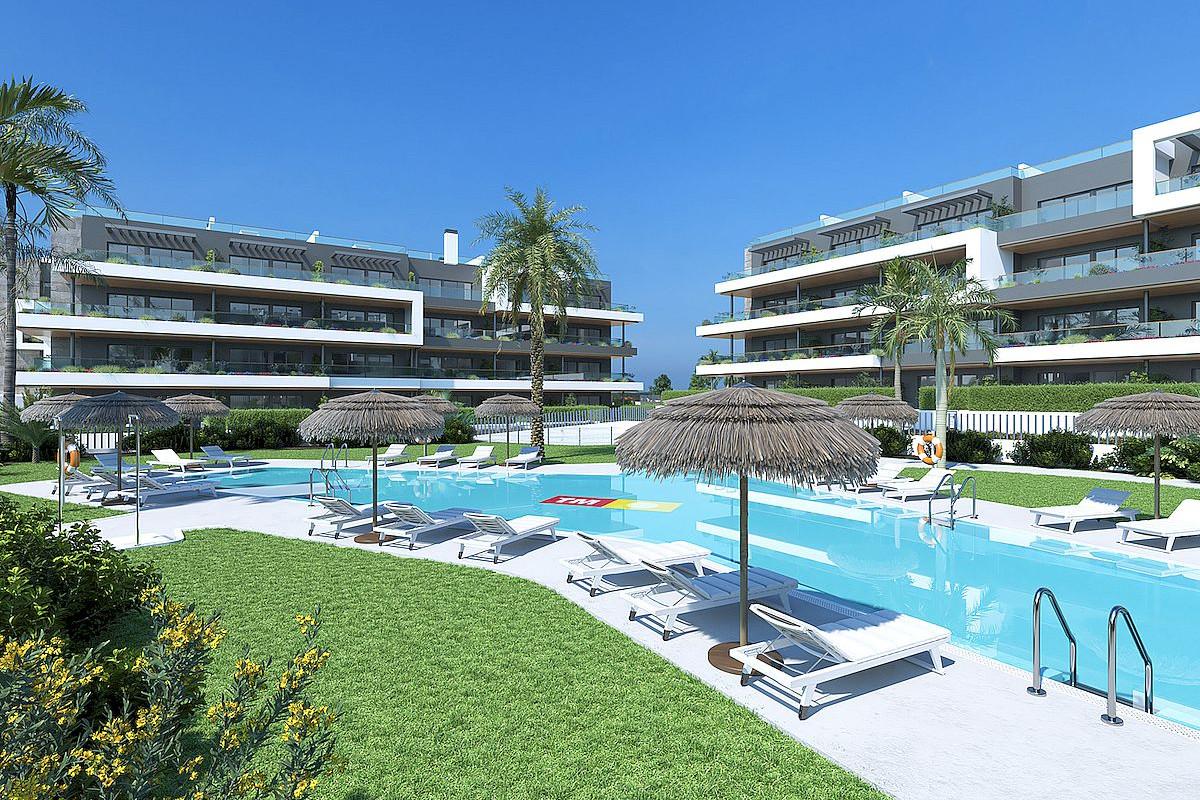
Community pools in an urbanisation are a different animal. The comunidad de propietarios must appoint a técnico responsable, keep a daily log of chlorine and pH readings, and in most cases hire a licensed pool management company. These costs are split by cuota de participación and show up as a line item in the annual community budget. On a mid-range Costa Blanca urbanisation of 40 to 80 homes, the pool line is typically EUR 180 to 450 per owner per year, bundled into the community fee.
For the broader rulebook on who pays what in a shared setup, our deeper piece on communal versus private pool maintenance costs breaks the numbers down by urbanisation size.
How much does a pool cost to run per month in Spain?
The answer depends on vessel size, treatment system, whether you heat it, and how often you actually swim. Below are 2026 ranges for the Costa Blanca and Costa Cálida, based on quotes from pool firms in Torrevieja, Calpe, Denia, and Los Alcázares. All figures assume Mediterranean coast, standard tap water quality, and a reasonable pool enclosure (no heavy tree debris).
| Pool type | Size assumed | Chemicals + service | Electricity | Monthly total (summer) | Monthly total (winter) |
|---|---|---|---|---|---|
| Community pool (per owner) | shared | included in cuota | included | EUR 15 to 40 | EUR 15 to 40 |
| Private chlorine, uncovered | 32 m2 | EUR 70 to 90 | EUR 25 to 55 | EUR 95 to 145 | EUR 40 to 70 |
| Private saltwater, uncovered | 32 m2 | EUR 55 to 80 | EUR 30 to 60 | EUR 85 to 140 | EUR 35 to 65 |
| Private chlorine, heated | 32 m2 | EUR 70 to 90 | EUR 120 to 220 | EUR 190 to 310 | EUR 90 to 180 |
| Infinity / overflow | 40 m2 | EUR 110 to 160 | EUR 60 to 120 | EUR 170 to 280 | EUR 70 to 130 |
| Lap pool, 12 m | 45 m2 | EUR 90 to 130 | EUR 45 to 90 | EUR 135 to 220 | EUR 55 to 100 |
Annualised, a standard private pool runs EUR 900 to 1,400 per year. A heated infinity pool on a Benissa or Moraira hillside villa can clear EUR 2,500 per year, more if you heat it year-round. Add one-off costs every three to five years: liner replacement (EUR 2,500 to 6,000 depending on size), salt cell renewal (EUR 400 to 900), and pump replacement (EUR 600 to 1,500). Our broader villa versus apartment annual cost comparison folds pool costs into the full ownership picture.
Salt pools deserve a specific note. The myth that saltwater is chemical-free is wrong; the salt cell generates chlorine electrolytically, you still monitor pH, and you still shock-treat after storms. What saltwater buys you is softer skin, no chlorine smell, and a lower monthly chemical bill. The trade is higher upfront cost (EUR 1,200 to 2,500 for the system) and salt cell replacement every five to seven years.
Who should buy a property with a pool, and who should skip it?
A private pool makes sense if you spend more than six weeks a year at the property, have children or grandchildren who actually swim, or plan to rent short-term where a pool is a hard filter on booking platforms. A couple using a Costa Blanca apartment four weeks a year as a winter escape rarely gets EUR 1,200 of value from a private pool; the community pool across the lawn is enough.
Skip the private pool if the plot is tight (less than 400 m2), if you buy in a frost pocket inland (Hondón de las Nieves, parts of Polop), or if the vessel is older than 25 years with no documented liner or plumbing refresh. We have seen EUR 15,000 structural repair bills on 1990s pools where the owner inherited unknown cracks. On resale properties always ask for the last three years of chemical logs and the age of the liner before you factor the pool into your bid.
For town-specific running costs that include pool line items, see our breakdowns for Denia property running costs and Benidorm apartment running costs. Electricity is the hidden swing factor: a pool pump pulling 1.1 kW for six hours a day in July adds roughly EUR 40 per month at 2026 tariffs. Combine that with air conditioning running cost and you understand why summer bills feel disproportionate.
FAQ
Do I legally have to fence my private pool in Spain? National law does not require fencing a single-family private pool, but several Valencia and Murcia municipalities now require it for new builds and for pools visible from public space. Insurers increasingly ask the question too. A compliant fence is 1.1 m minimum with a self-closing gate.
Can I drain my pool during a drought ban? Usually no. During active drought protocols the ayuntamiento bans refilling private pools from the mains. Emptying a pool you cannot refill is a bad plan. Pool firms carry licensed tanker water in restricted periods at roughly EUR 90 to 150 per full load.
Is a saltwater pool really cheaper to run? Monthly chemistry runs 15 to 25 per cent lower than chlorine, but you pay for it upfront in the salt cell and in cell replacement every five to seven years. Over a ten-year horizon the two systems cost roughly the same. Pick saltwater for comfort, not economy.
Can the community pool be closed for part of the year? Yes, and most are. Standard practice on the Costa Blanca is a May to September opening, with the community vote fixing the exact dates each year. If you want year-round swimming, buy where the complex has a heated indoor pool, which lifts community fees meaningfully.
Next steps
If a pool matters to your decision, filter by vessel type and plot size before you fall for a photograph. Browse private-pool villas in our Costa Blanca sale catalogue and ask Wesna for the maintenance history on each shortlist property.
Get our Costa Blanca property guides
One short email a month with new neighborhood guides, market notes, and rule changes. No spam, unsubscribe in one click.
We use your email only for the newsletter. Read our privacy policy for details.