
Buying for Retirement in Spain 2026: the 60+ Checklist
 Wesna Group
To qualify for the Non-Lucrative Visa in 2026 a retiree needs passive income of roughly EUR 2,400 per month, plus around EUR 600 per dependent. That single number sets the shape of the whole retirement move.
To qualify for Spain's Non-Lucrative Visa in 2026 a retiree needs stable passive income of roughly EUR 2,400 per month, plus around EUR 600 per month per dependent. That is the main financial gate between a British, American or Canadian pensioner and legal residency on the Costa Blanca. Everything else on this checklist, from the house choice to the health cover, flows from how you plan to clear it.
How many over-60s actually move to Spain, and where do they settle?
According to INE padrón data, roughly 303,000 British citizens, 150,000 Germans and 50,000 Dutch nationals were registered as residents in Spain at the start of 2025, and a disproportionate share of them live in Alicante province. Within that province the retiree map is remarkably stable year after year. The south of the Costa Blanca, from Torrevieja down to Pilar de la Horadada, draws the largest British and Irish retirement community. The north coast around Altea, Alfaz del Pi and Albir is denser with Nordic and Dutch pensioners. The hinterland behind Benidorm, Polop and La Nucia in particular, catches the retirees who want a view and a garden without paying coast prices.
The pattern is not accidental. Each cluster has grown around three services a 60+ buyer actually uses: an English-speaking GP, a bus or tram link to a hospital, and a supermarket where the staff recognise you. If you cannot picture those three within a ten-minute drive of the house, the location is probably wrong, regardless of the view.
Stock reflects that demand. Our live catalogue carries 283 listings in Torrevieja, 113 in Pilar de la Horadada, 86 in Altea and 47 in Alfaz del Pi, which covers most of the recognised retirement belt. For a deeper read on the dominant retiree flow, see our British retirees Costa Blanca post-Brexit guide.
Which visa fits a retiree in 2026?
Since the Golden Visa was abolished in April 2025, retirees from outside the EU have two realistic routes: the Non-Lucrative Visa (NLV) and, if you still work remotely on the side, the Digital Nomad Visa. For a straight-up pensioner the NLV is the standard answer.
The NLV requires that you do not work in Spain. You must prove passive income (pension, dividends, rental, annuities) at approximately 400% of the IPREM for the main applicant, plus 100% per dependent. In 2026 that lands near EUR 2,400 and EUR 600 respectively, subject to the annual IPREM update. You also need private Spanish health insurance with no co-payments and no exclusions, a clean criminal record certificate from every country you have lived in during the last five years, and a Spanish consulate appointment in your country of residence.
The NLV is granted for one year, then renewed for two years twice, then a five-year renewal. After five continuous years you can apply for permanent residency. The main trap: once you hold the NLV you become Spanish tax resident, which means worldwide income is taxed in Spain. That is manageable with planning, less so if you discover it the week before signing.
EU retirees (German, Dutch, Irish and so on) do not need a visa. They register as EU residents using an EU certificate, which is a simpler process but still triggers tax residency once you cross 183 days a year. UK pensioners who draw a state pension can usually attach the S1 form to get Spanish public healthcare paid for by the NHS.
For the detailed procedure, read the Spain Non-Lucrative Visa step-by-step guide.
What paperwork do you actually need before signing?
The document stack for a retiree buyer is longer than for a working-age buyer, mostly because the income evidence has to cover both the visa file and the mortgage file, if there is one. Expect to assemble:
- NIE number. Non-negotiable before any purchase. Apply at a Spanish consulate at home or at a police station in Spain. See our NIE for non-residents 2026 guide.
- Proof of income. Pension statements for the last 12 months, bank statements showing those pensions actually arriving, and a letter from your pension provider confirming the payments will continue. For investment income, broker statements and a dividend history.
- Spanish bank account. Opened in person or remotely with a certified passport copy. Needed to pay utilities, the IBI tax and the community fee.
- Private health insurance. For the NLV it must have no co-payments. For retirees over 65 some insurers refuse new policies, which narrows the shortlist to a handful of providers.
- Criminal record certificate. Apostilled and sworn-translated into Spanish. Valid for three months, so time it carefully.
- Lasting power of attorney, if either spouse cannot travel for signing. Routine, not alarming.
- Spanish will. Separate from your UK, Irish or home-country will. A Spanish will covering Spanish assets avoids a probate mess for your children.
On the property side, the lawyer will want the nota simple from the Registro de la Propiedad, the catastral reference, the latest IBI receipt, the community fee certificate showing no arrears, and the energy performance certificate. If you are over 60 and buying resale, add a specific instruction to the lawyer: check that the community has no planned derrama (special levy) for lift replacement, facade repair or pool compliance. These levies land after signing and routinely cost existing owners EUR 2,000 to EUR 8,000.
For the full purchase sequence and cost breakdown, our total cost of buying property in Spain guide runs through notary, registry, taxes and legal fees.
How should a 60+ buyer handle money, banking and currency?
Most retirement purchases are cash, no mortgage. That is sensible at 60 and essentially mandatory at 70, since Spanish lenders typically cap the final mortgage payment at age 75. The mechanics of moving the funds are where retirees lose the most money, usually to high street bank spreads rather than to any dramatic market move.
Use a regulated currency broker, not your retail bank. On a EUR 250,000 purchase the difference between a mid-market exchange and a typical high street rate is commonly 1.5% to 2%, which is EUR 3,750 to EUR 5,000 on a single transfer. Pre-agree a forward contract if you want to lock the rate before completion, which can be weeks or months after the arras (deposit) contract is signed.
Spanish banks will ask you to document the origin of funds under anti-money-laundering rules, and "this is my pension pot" is not enough. They want statements showing accumulation over years and the final transfer trail. Large cash transfers from a UK account into a newly opened Spanish account sometimes trigger a compliance hold of 48 to 72 hours. Allow for it when planning the completion date.
If you are moving funds from the UK, read our transfer money to Spain from UK guide. Currency timing matters more at 60 than at 40, because you probably will not re-earn the capital. If GBP or USD is weak against the euro, consider staging the purchase: pay the 10% arras deposit now, defer the 90% completion by two or three months and watch the rate.
What does the local service layer look like on the Costa Blanca?
The service layer is the quiet reason retirees stay. On the north coast, Albir and Alfaz del Pi run a bilingual town hall, a Norwegian school, Scandinavian GP practices and a direct bus to the Hospital Marina Baixa in La Vila. Altea has English-speaking notaries used to foreign buyers. On the south coast, Torrevieja hospital has large English, Scandinavian and German-speaking patient groups and a dedicated foreigners' desk at the ayuntamiento.
Air access is the other practical gate. Alicante-Elche airport runs year-round direct flights to about 90 destinations across the UK, Ireland, Scandinavia, the Netherlands, Germany and Switzerland. From Torrevieja the drive is 40 minutes, from Altea about 70, from Denia around 90. If your grandchildren live in Manchester, Oslo, Amsterdam or Dublin, that drive time is part of the house decision.
UK state pensioners holding an S1 form get full access to Spanish public healthcare paid by the NHS, which is the single biggest financial reason the UK retiree flow continues. For a comparison of what you keep and what you lose, read NHS versus Spanish healthcare for UK buyers. American and Canadian retirees cannot use S1 and will pay private insurance for life, which typically costs EUR 150 to EUR 400 per month per person depending on age and conditions.
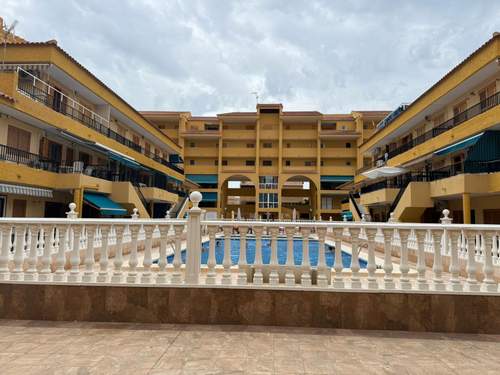
Single-storey living matters more than most buyers in their early 60s want to admit. Villas with the bedrooms upstairs look charming at 62 and become a problem at 78. If you expect to stay 15 years or more, prioritise bungalows, ground-floor apartments with a lift, or villas with a master suite on the main floor. A pool is pleasant; the maintenance bill is not. A community pool with 40 owners sharing the cost usually works out better than a private 8 by 4 metre basin that nobody swims in from November to April.
FAQ
Can I buy a Spanish house without becoming a Spanish tax resident?
Yes. Buying property does not create tax residency. Spending more than 183 days a year in Spain does, as does moving your centre of economic interests here. Many retirees own a Spanish home and stay under 183 days, remaining tax resident in their home country. They file the non-resident Modelo 210 each year for the imputed income on the property.
Is 60 too late to get a Spanish mortgage?
It depends on the lender and the loan term. Spanish banks generally want the final payment to fall before the main borrower turns 75, which caps the term. At 60 you can usually get 15 years; at 65, closer to 10; past 70 it becomes difficult. Most retirees over 65 end up buying in cash.
Do I need a Spanish will if I already have one at home?
Technically no, practically yes. A Spanish will covering only your Spanish assets runs through a Spanish notary and dramatically shortens probate for your heirs. It costs around EUR 60 to EUR 100 to draft. Not having one can delay inheritance of the property by a year or more.
What happens to my UK state pension if I move to Spain?
It continues to be paid, uprated annually under the UK-EU withdrawal agreement for pensioners who were already receiving it, or who moved before specific cut-off dates. New movers should check the current position with the DWP before relocating. Spanish tax applies if you become tax resident.
How much are the running costs on a typical retirement property?
For a two-bedroom coastal apartment, expect EUR 2,500 to EUR 4,000 per year for IBI, community fees, basic insurance and utilities combined. For a three-bedroom villa with a private pool, EUR 5,000 to EUR 8,000 is realistic. Our villa versus apartment real annual cost note breaks the figures down.
Next steps
Start with the income number: can you clear roughly EUR 2,400 per month in verifiable passive income? If yes, book the consulate NLV appointment and shortlist two or three towns. Browse our stock in Torrevieja and call us on +34 744 64 42 28 to walk the shortlist in person.
Get our Costa Blanca property guides
One short email a month with new neighborhood guides, market notes, and rule changes. No spam, unsubscribe in one click.
We use your email only for the newsletter. Read our privacy policy for details.