
Penthouse (Ático) in Spain 2026: Terrace Law and Noise Rules
 Wesna Group
An ático on the Costa Blanca costs roughly 10% to 20% more than the same flat three floors down, and the terrace is usually a common element the community owns. Who pays when the membrane fails, whether you can glaze it, and the noise nobody mentions.
An ático on the Costa Blanca costs roughly 10% to 20% more than the identical flat three floors below it, and most of that premium buys terrace. What surprises foreign buyers is that the terrace is often not theirs in the way they assume. The community owns the slab and the waterproofing under it. You hold exclusive use, which is a different thing.
What "ático" actually means in Spain
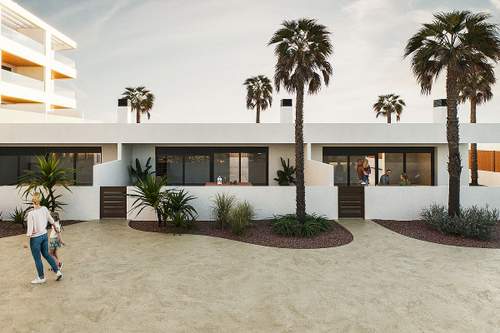
Ático is a floor label, not a marketing category. It sits on the deed and the Catastro record the same way "planta 3, puerta B" does, and it marks the top floor of a block where the outside wall steps back from the facade line below. Stepping the top storey inwards is how architects add a floor under a municipal height cap. Your terrace is therefore the roof of the flat underneath, which is where the legal friction starts.
In the UK, penthouse is a sales word agents attach to anything with a balcony; in Spain it carries no such promise. A 1978 ático in Torrevieja with 58 m2 inside and 22 m2 of terrace qualifies, and so does a new-build in Calpe at three times the money. A top unit with an internal staircase becomes an ático dúplex, carrying the terminology traps of any Spanish duplex or adosado.
The terrace is a common element with private use
The Ley de Propiedad Horizontal (Ley 49/1960) and article 396 of the Civil Code both put the roof of a building among the common elements. When the top floor steps back, the exposed roof below becomes your terrace, while its structure, drainage and waterproofing membrane stay in community ownership. The paperwork calls this elemento común de uso privativo: common element, private use.
That distinction decides who pays. Article 10.1 LPH obliges the community to keep the building in proper condition, so when the membrane fails and the ceiling below stains, the repair is usually a community cost split by coeficiente de participación. You pay for what you laid on top, and for the whole job if the leak traces back to your own work: an anchor bolt driven through the membrane, or a drain blocked with soil from your pots.
Some communities write an exception into their estatutos, registered at the Registro de la Propiedad, putting terrace conservation on whoever uses it. Courts enforce those clauses, so ask for the estatutos and not just the last minutes. Article 9.1.c also obliges you to let the community in for repairs, with compensation for any damage.
Read the deed and the minutes before you offer
- Nota simple and escritura. Check whether the terrace appears as an anejo you own or is absent from the description, which almost always means common with private use. Our guide to escritura vs nota simple explains both.
- Actas of the last three juntas. Any derrama voted for the roof, any leak reported.
- Certificado de estar al corriente. Article 9.1.e LPH makes you liable for community debts from the current year and the three before it.
Glazing, pergolas and the licence trap
Glazing needs two permissions. Enclosing a terrace alters a common element and changes the facade, which under article 17.6 LPH takes unanimity in the junta unless the estatutos authorise a specific model. The ayuntamiento comes next: town halls treat a fixed, roofed enclosure as new built surface, and if the block has used up the buildable allowance in the local plan, no licence exists to grant. A light pergola without foundations usually passes with a declaración responsable.
Unlicensed glazing sits on balconies all along this coast, much of it from the 1990s, but tolerance is not a licence. The bill arrives at resale, when the buyer's valuer compares what is built against the registry and the Catastro. Ask the seller in writing which works carried one.
Noise, sun and wind on the top floor
Rooftop plant sits above the ático because there is nowhere else for it. Lift machine rooms thump every time someone presses a button, and pressure pumps cycle at odd hours. Article 17.1 LPH lets a minority add more, since renewable energy and telecommunications installations need only one third of owners representing one third of the quotas.
Complaints run the other way too: your terrace floor is somebody's bedroom ceiling and chairs dragged across tiles at midnight travel down through the slab. Spain regulates noise through Ley 37/2003 and Real Decreto 1367/2007, with each ayuntamiento's ordenanza setting the night period from 22:00 or 23:00. Rubber feet and a raised timber deck on pedestals solve most of it, and the deck protects the membrane.
Sun does the rest. A south-west terrace is unusable between roughly 14:00 and 18:00 in July without shade, and cooling bills run above the same flat mid-block, especially in blocks predating the 2006 Código Técnico de la Edificación. Waterproofing lasts roughly 15 to 25 years under this ultraviolet, and tiling hides its condition, so judge it by the age of the block and the date of the last roof derrama.
What an ático costs to own
| Feature | Ático | Mid-floor flat | Duplex |
|---|---|---|---|
| Outdoor space | Set-back terrace, 20 m2 to 60 m2 | Balcony, 6 m2 to 12 m2 | Terrace or small garden |
| Who owns the surface | Community, exclusive use to you | Slab common, railings are facade | Often an anejo you own |
| Who pays for the membrane | Community for waterproofing, you for finishes | Community, nearly always | Community for the roof |
| Enclosing or roofing it | Junta agreement plus licence, often refused | Rarely possible | Depends on the local plan |
| Summer heat load | Highest, roof gains sun all day | Lowest, sandwiched between flats | Upper level takes roof heat |
| Price against an equal flat | Roughly 10% to 20% more | Baseline | Usually between the two |
Community fees on a coastal block with a lift and a pool run in the region of EUR 60 to EUR 150 a month, and the ático pays a larger share because the coefficient in the título constitutivo follows surface. Builders quote a full roof renewal on a 30-unit block at EUR 40,000 to EUR 90,000, so an owner on a 3% coefficient faces roughly EUR 1,200 to EUR 2,700 of it. IBI moves less than people expect, because the Catastro counts a covered but open terrace at 50% of its area toward built surface and an enclosed one at 100%, which is also how an unlicensed cerramiento surfaces in a tax record. Our villa vs apartment cost comparison covers running costs, and what buying in Spain really costs itemises the purchase side at roughly 10% to 13%.
Who it suits, and who should walk away
An ático rewards people who live here. If you eat outside 200 days a year or want light and no footsteps overhead, the premium is money well spent, and a top floor with a usable terrace fills faster in long-term letting. For tourist letting, settle the licence question first, because across the Comunitat Valenciana the licence binds harder than the property, as our guide to the Valencian short-let rules explains.
Walk away if you visit twice a year and shutter the place in between, because drains fill with leaves while the membrane ages regardless. Walk away too if a EUR 2,500 derrama would hurt, since on an older block that call comes eventually.
Áticos cluster in the older, denser blocks: Torrevieja, central Benidorm, Santa Pola and Guardamar. Our Torrevieja sale listings hold the deepest choice of top-floor units, and WES-1410, a 1-bed 77 m2 apartment in Benidorm's Cala Finestrat at EUR 275,000 sits in the band where buyers ask these questions most.
Questions buyers ask
Is the terrace included in the square metres in the advert?
Often, and portals rarely say so. A listing at 110 m2 can be 80 m2 of interior plus a 60 m2 terrace counted at half. Ask for the superficie construida and the superficie útil separately, then check both against the nota simple.
Who pays if my terrace leaks into the flat below?
The community normally pays, because the membrane is a common element, and the cost splits by participation coefficient. You pay for your own finishes, and for everything if the leak came from your works or a drain you blocked.
The seller has already glazed the terrace. What do I check?
Two documents: the junta agreement authorising that type of enclosure, and the municipal licence or declaración responsable. Then compare the Catastro record against what stands there. If the enclosure does not appear, budget for regularisation.
Does an ático hold its value?
Top floors with a usable terrace resell faster than mid-floor flats in the same block, and they hold the premium best where there is a view. The exception is a block with roof leaks in its minutes, a record buyers' lawyers read.
Next steps
Before you offer, ask for the escritura, the estatutos and the last three sets of junta minutes, and read the terrace clauses first. Then browse our Benidorm listings and check which floor each unit sits on.
Get our Costa Blanca property guides
One short email a month with new neighborhood guides, market notes, and rule changes. No spam, unsubscribe in one click.
We use your email only for the newsletter. Read our privacy policy for details.