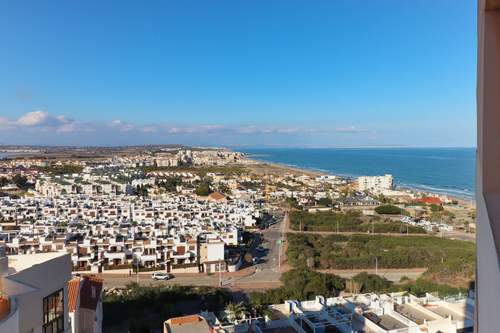

95 Blue Flag Beaches Costa Blanca 2026: Town-by-Town Map
 Wesna Group
Alicante province collected 95 Blue Flag awards in 2026, more than any other Spanish province. Torrevieja 9, Denia 7, Orihuela Costa 6, Calpe 5, plus 8 smaller pockets most guides miss. Town-by-town map with drive times from the AP-7 and access notes for each.
Alicante province collected 95 Blue Flags in 2026. That puts the Costa Blanca ahead of every other Spanish province for the eighth year running, and helps the Valencian Community to 174 flags total - more than Andalusia, Galicia, or anywhere else. Spain holds the world record at 677 Blue Flag beaches, and roughly one in seven of them sits between Denia and Pilar de la Horadada.
If you're scouting where to buy, rent for the summer, or just plan a longer stay, the Blue Flag map is a fast filter. Here's what changed in 2026, which beaches kept their streak, and where the cleanest sand actually is.

What the Blue Flag actually certifies
ADEAC (Asociación de Educación Ambiental y del Consumidor) runs the program in Spain on behalf of the Foundation for Environmental Education. To fly the flag, a beach has to pass 33 criteria across four pillars: water quality (testing all summer), environmental management, environmental education, and safety + services. Bathing water has to score "excellent" on every test. Lifeguards must be on duty. Disabled access ramps and showers count. So do bins, first-aid posts, and beach patrol cars.
Lose one criterion mid-season and the flag comes down. That happened to two beaches this year: Cabanyal in Valencia city and Cala Fustera in Benissa, both dropped from "excellent" to "good" on water quality. Not bad water, just not Blue Flag quality.
The 2026 flags are valid until the 2027 summer review.
North Costa Blanca: Denia, Jávea, Calpe, Altea
The northern stretch from Denia to Altea picks up most of the province's award density. Seven towns share more than 30 flags between them.
Denia brought home seven beach flags: Els Molins, Les Bovetes, Les Deveses, Les Marines, Marineta Cassiana, Punta Negra, and Punta del Raset. Les Marines is the long sandy run families come back to year after year. Marineta Cassiana sits inside the marina arc and stays calm even when the rest of the coast gets choppy. If you're browsing apartments in Denia, the closer-to-Marines belt is where rental demand peaks.

Jávea (Xàbia in Valencian) got l'Arenal back after a brief gap. It's the town's main sand beach, hemmed in by promenade restaurants. Granadella, the cove on the south side, didn't qualify this year on the official list but stays the photogenic favourite. Property in Jávea divides cleanly between the Arenal seafront and the hillside Montgó terraces with sea views.
Benissa picked up a new flag at Cala Advocat. The town had Cala Fustera too, but Fustera lost its 2026 award. Advocat is small, rocky, and walk-in-only, which keeps the crowds thin.
Calpe took three flags this year: La Fossa (the long Levante-side beach under the Peñón d'Ifach rock), plus two newcomers, Puerto Blanco and El Raco. La Fossa has flown the flag every year since the program started in Spain in 1987, one of only seven Spanish beaches on the 37-year streak. Calpe property listings cluster around La Fossa and the marina.

Altea regained l'Espigo. The town's beaches are pebble more than sand, which suits the fishing-village character of the old town. Snorkelling improves with rocks.
Central Costa Blanca: Benidorm, El Campello, Alicante, Santa Pola
The middle stretch packs the biggest tourist beaches and a few quiet surprises.
Benidorm kept Llevant and Ponent. Same two beaches you've seen on every postcard. Llevant is the south side, slightly less crowded; Ponent runs north towards the old town. Together they handle over a million summer visitors. Water quality holds up because the city invested heavily in a sewage upgrade in the early 2010s.
El Campello added Cala Lanuza as a 2026 newcomer. It's a small cove on the rocky stretch between El Campello town and Alicante, easy to reach by the TRAM Metropolitano coastal tram from either side. El Campello catalog skews toward townhouses near the marina.
Alicante city holds four flags: San Juan, Postiguet, Saladares-Urbanova, and Tabarca Island. San Juan is the city's 7 km golden-sand stretch and has flown the Blue Flag for 37 straight years, sharing that streak with La Fossa in Calpe and El Carregador up in Castellón. Postiguet sits directly under Santa Bárbara castle in the centre - five minutes walk from the train station. Tabarca is a 45-minute boat ride and a protected marine reserve, the only inhabited island in the Valencian Community.

Apartments in Alicante city sit at premium prices in the Playa San Juan strip and the old town, with more affordable options inland.
Santa Pola got Tamarit back this year after losing it briefly. The town is famous for salt flats and flamingoes inland, plus a working fishing port and shallow family beaches like Gran Platja and Lisa.
South Costa Blanca: Guardamar, Torrevieja, Orihuela Costa, Pilar de la Horadada
The southern half of the province actually beats the north on raw flag count.
Guardamar del Segura picks up multiple flags every year along its 11 km dune-backed coast. The Playa Centro is the main one, with the Vivers pine forest providing natural shade. Quiet by Torrevieja standards.
Torrevieja holds nine Blue Flags in 2026, more than any other single municipality on the Costa Blanca. La Mata is the biggest, 2.5 km north of the centre. Playa del Cura, Los Locos, and Naufragos run through the urban stretch. Torrevieja apartments sell at some of the most accessible prices on the coast, which keeps rental demand year-round.

Orihuela Costa has 10 recognised beaches and coves between them, putting the municipality in second place nationally for individual Blue Flag count. The named ones include Cala Capitán (between La Zenia and Cabo Roig), Playa Flamenca, La Glea, Cabo Roig, La Caleta, and Punta Prima. Most are small coves rather than long beaches, which is why the count adds up so fast. Orihuela Costa property skews to British and Northern European buyers and resale apartment stock.

Pilar de la Horadada at the southernmost edge of Alicante picks up flags at Mil Palmeras, Las Higuericas, and El Mojón. Sandy, family-oriented, less developed than further north.
The 37-year streak: La Fossa, San Juan, El Carregador
Seven beaches across all of Spain have flown the Blue Flag every single year since the program launched in Spain in 1987. Three are nearby:
- La Fossa (Calpe) - the long beach north of the Peñón d'Ifach
- San Juan (Alicante) - the 7 km city beach
- El Carregador (Alcossebre, Castellón) - the only one north of the Costa Blanca
For property buyers, this matters because Blue Flag continuity over decades is a stronger signal than a flag that comes and goes. La Fossa and San Juan are both in dense rental markets where year-round occupancy is normal, and water quality is one of the things short-term-rental guests rate explicitly.
What's new in 2026
ADEAC added four new flags to Alicante province this year:
| Beach | Town | Type |
|---|---|---|
| Cala Advocat | Benissa | Small cove, rocky access |
| Puerto Blanco | Calpe | Marina-adjacent |
| El Raco | Calpe | Quieter, less crowded |
| Cala Lanuza | El Campello | Tram-accessible cove |
Plus three restored flags after gaps: l'Arenal (Jávea), l'Espigo (Altea), Tamarit (Santa Pola).
And two losses, both due to water quality dropping from "excellent" to "good" on at least one test: Fustera (Benissa) and Cabanyal in Valencia city. Neither is dangerous to swim at. They just stopped clearing the Blue Flag bar.
When to visit Costa Blanca beaches
Blue Flag certification only covers the summer season, June through September. Lifeguards staff the major beaches from mid-June to mid-September, sometimes extending into October on the busier ones like San Juan and La Fossa.
May is the sweet spot. Water is warm enough by mid-month (19-21°C), beach services are running at week-ends, and prices on accommodation are still off-peak. June through August is high season: water hits 24-26°C, every chiringuito is open, and beaches fill from 11am. September pulls back to May's pattern - warm water, fewer people, lifeguards still on duty until the 15th-30th depending on the town.
October to April the flags come down, but several beaches stay perfectly walkable. Empty San Juan in November is one of the best winter scenes on the coast.

FAQ
How many Blue Flag beaches does the Costa Blanca have in 2026?
Alicante province has 95 Blue Flags total. That breaks down to 73 beaches plus 15 marinas plus a handful of other categories. Costa Blanca-area only (without parts that overlap with neighbouring Murcia) sits at 88 locations.
Which Costa Blanca beach has held a Blue Flag the longest?
Two: La Fossa in Calpe and San Juan in Alicante. Both have flown the flag every year since 1987, when the program started in Spain. They share that 37-year streak with five other Spanish beaches across the country.
Did any Costa Blanca beach lose its Blue Flag in 2026?
Yes, Cala Fustera in Benissa. The water quality dropped from "excellent" to "good" during the testing season. The water is still safe to swim, but it didn't pass the strict Blue Flag bar. The award lasts one season, so Fustera can apply again for 2027.
What does a Blue Flag actually guarantee for swimmers?
Water tested at least every two weeks and graded "excellent" all season. Lifeguards on duty during stated hours. Accessibility features like ramps, showers, and adapted toilets. Marked swim zones. Information boards listing the day's water quality and any local hazards. Litter management. A nearby first aid post.
Which Costa Blanca town has the most Blue Flag beaches?
Orihuela Costa with ten coves and beaches, narrowly ahead of Torrevieja with nine. Orihuela's count is higher because most of its awarded sites are small coves rather than long beaches. Both sit in the southern half of the province.
Are Blue Flag beaches dog-friendly?
Almost none during the summer (mid-June to mid-September). Spanish municipal bylaws typically ban dogs on public bathing beaches in season. Some towns designate specific "playas caninas" outside the Blue Flag zone. Off-season, dogs are usually fine.
Picking property near the best beaches
If beach quality is what's driving your search, the 2026 Blue Flag list narrows things down fast. The northern Marina Alta (Denia, Jávea, Calpe) gives you sand plus mountain scenery and the highest property prices. The southern stretch (Torrevieja, Orihuela Costa) trades dramatic landscape for affordability and the densest flag count on the coast.
Browse properties for sale within walking distance of any of the beaches above, or filter for holiday rental properties if you're testing the area first before committing.
Anything you want a closer look at, send us the beach name and we'll show you what's listed within 800 metres of the sand.
By Erick Kit, General Manager at Wesna Group.
Get our Costa Blanca property guides
One short email a month with new neighborhood guides, market notes, and rule changes. No spam, unsubscribe in one click.
We use your email only for the newsletter. Read our privacy policy for details.